See Productivity in Real Time.
Monitor employee activity, track work hours, and improve team efficiency with powerful insights.
The 5 basic steps in payroll processing include collecting employee information, tracking work hours, calculating gross pay and deductions, distributing salaries to employees and maintaining accurate records by filing payroll taxes. By following these 5 steps employers can pay employees on time and comply with tax regulations or reduce their payroll mistakes.
Payroll is the most important part of every company because employees expect their salary to be credited on time and employers must follow tax and labor laws. Small payroll mistakes can lead to employee complaints and tax penalties.
If you are a small business owner or using payroll for the first time in your company, it is very important to understand 5 basic steps in processing payroll because it helps to make a reliable payroll process.
What Are the 5 Basic Steps in Processing Payroll?
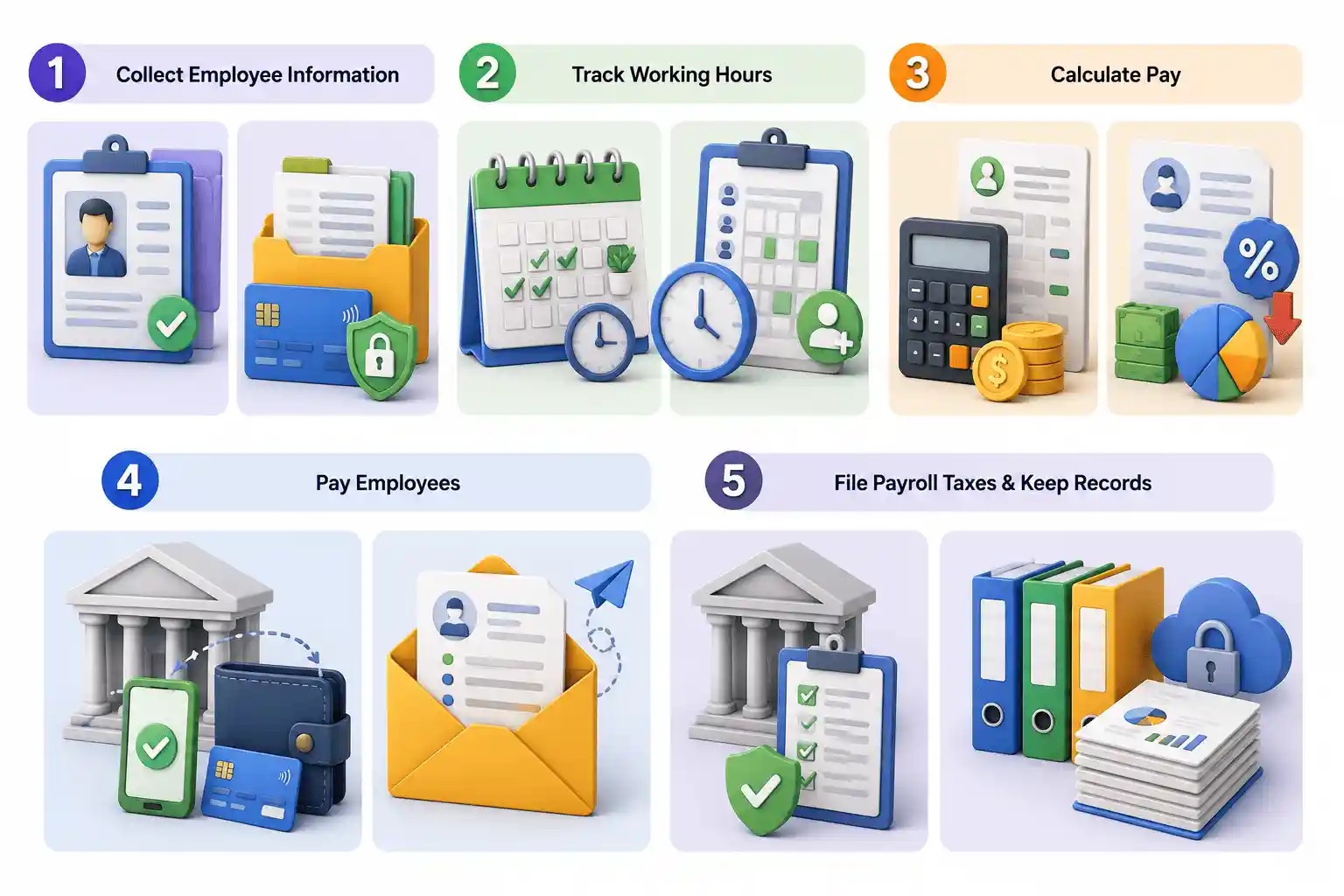
Step 1: Collect Employee Information and Tax Forms
The payroll process starts before an employee’s first salary by collecting important information like
- Full name of employee and address
- Bank account details
- Employment agreement
- Salary or hourly wage
- Pay schedule
- Contact numbers
Step 2: Track Employee Working Hours
Time tracking is an important part of the payroll process and it includes information like
- Overtime hours
- Paid leaves
- Holidays
- Total working hours
- Paid time off
Step 3: Calculate Gross Pay and Deductions
First calculate gross pay. You can use this formula.
For those who work on an hourly basis
Hours worked × Hour’s rate = Gross pay
For employees who work on a salary basis
Annual Salary ÷ Number of Pay Periods = Gross Pay
After calculating gross pay, subtract deductions such as
- Federal income tax
- State income tax
- Social security
- Medicare
- Retirement contributions
- Health insurance premium
After all deductions from gross pay it is called net pay.
Step 4: Pay Employees
You can use various methods to pay employees like
- Direct deposits
- Paper checks
- Payroll cards
After paying employees you have to send an email to employees about pay stubs
- Gross earnings
- Tax deductions
- Benefits deductions
- Net pay
- Pay period
When you provide clear information, it increases employee trust in you.
Step 5: File Payroll Taxes and Keep Payroll Records
Employers should maintain payroll records, including
- Employee timesheets
- Payroll reports
- Tax documents
- Pay stubs
- Payroll registers
Common Payroll Mistakes to Avoid
Experienced employers also make mistakes in payroll processing
- Missing overtime payments
- Incorrect employee information
- Wrong tax calculations
- Late payroll processing
- Not including paid leaves
- Poor payroll record management
Manual Payroll vs Payroll Software
| Factor | Manual Payroll | Payroll Software |
|---|---|---|
| Calculations | It requires more manual work | Automated calculations |
| Mistakes | Higher chance of mistakes | Less chance of mistakes |
| Time | Very time consuming | Saves time with faster processing |
| Records | Managed manually | Records managed automatically |
| Business Size | Good for small businesses | Good for businesses of all sizes |
Payroll Processing Checklist
Before you apply the 5 basic steps in processing payroll, you should confirm some main points like
- Employee information should be up to date
- Working hours approved
- Overtime hours have been verified
- Gross pay has been calculated
- Deductions have been reviewed
- Net pay has been checked
- Pay stubs have been generated
- Payments have been scheduled
- Payroll has been scheduled
How WorkDesQ Makes Payroll Processing Easier
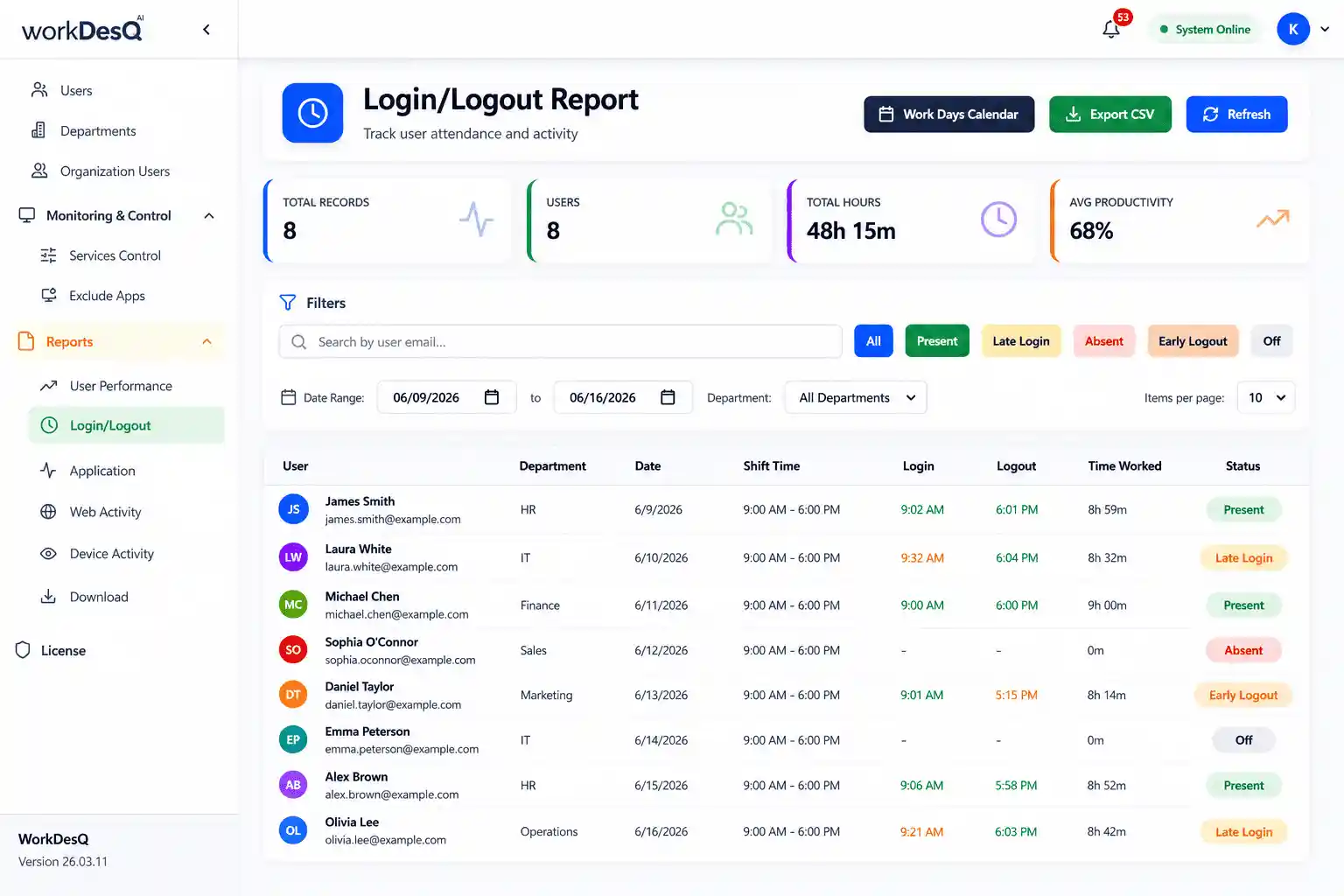
Employee attendance records are also an important part of payroll processing and WorkDesQ is a popular tool for providing accurate employee attendance data and making payroll faster and easier. You do not need to calculate employee attendance manually like using Excel for attendance or any biometric machine.
- Automatically track employee attendance and working hours
- Record login and logout time and total hours worked
- Tracks overtime hours for accurate payroll calculations
- Keep leave and attendance in one place
- Make it easy to calculate employee salaries based on actual working hours
- Keep attendance organized for payroll and audits
- It helps managers review and approve leave records quickly
Final Thoughts
Understanding the basic steps in payroll processing helps businesses to make a reliable payroll system and ensure employees get paid on time. From collecting employee information to filing payroll taxes, every step helps businesses pay employees correctly and keep payroll records correctly.
Manual payroll is only good for small businesses but for growing businesses you should choose automated payroll software because it saves a lot of time and reduces mistakes in payroll processing. It does not matter whether you use manual or software-based payroll, you need to follow these 5 main steps in payroll processing so it becomes easy and supports long term growth.