See Productivity in Real Time.
Monitor employee activity, track work hours, and improve team efficiency with powerful insights.
California required training for employees includes many mandatory programs which help to maintain legal compliance, improving workplace safety and follow standard labor laws, this mandatory program includes
- Sexual harassment presentation (SB 1343)
- Workplace violence prevention (SB553)
- Cal/OSHA injury
- Illness prevention plans (IIPP)
- Hazard communication programs
For example
If an employee worked in the same role in the previous organization, then usually the employee becomes productive within 1 or 2 months.
Why Is Employee Training Required in California?
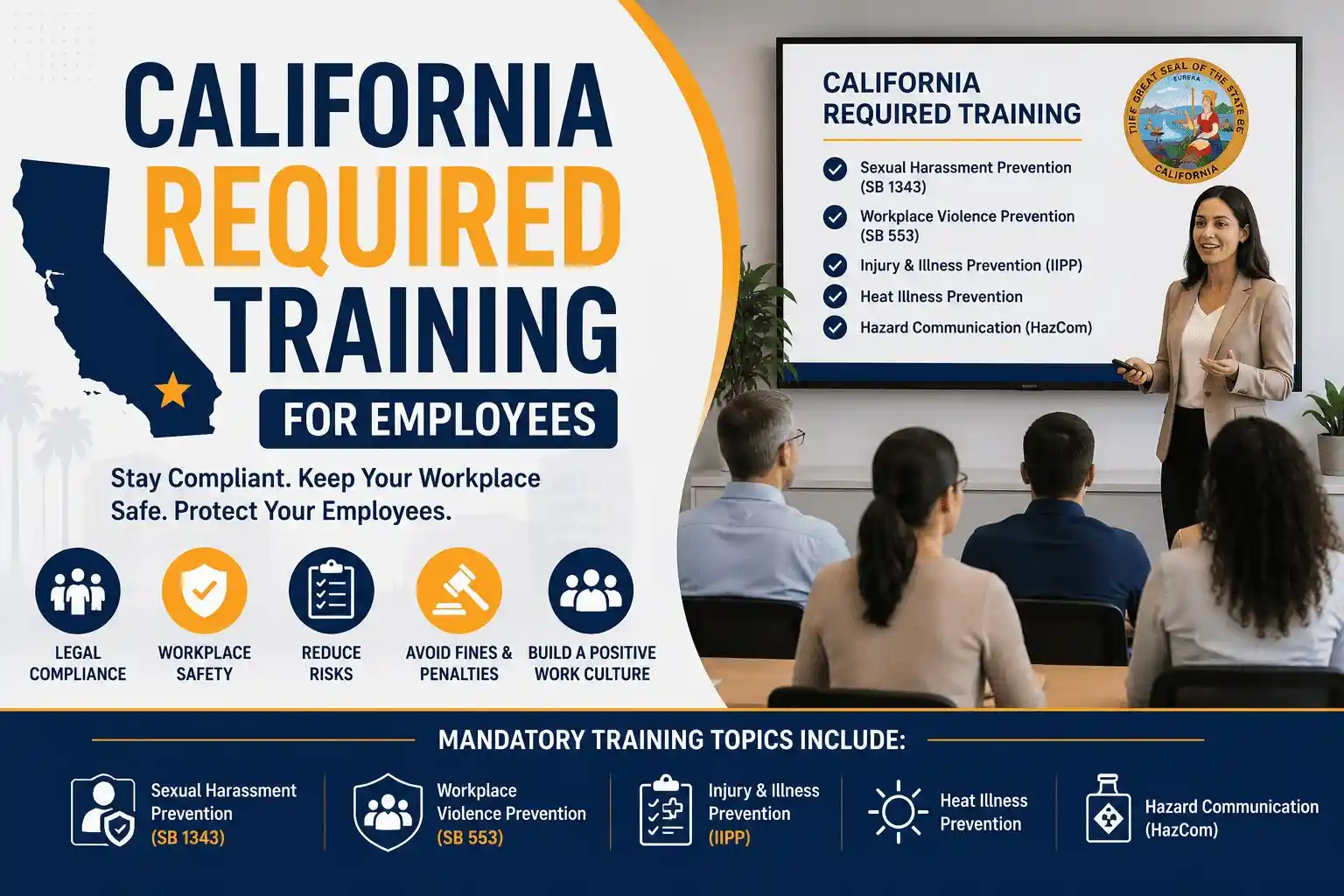
In California companies must follow strict labor laws, state agencies like Cal/OSHA and California Civil Rights Department (CRD) require workplace training to protect employee safety, prevent discrimination and harassment.
Providing required training for employees in California helps business owners to avoid legal disputes. Maintaining compliance reduces risks like costly lawsuits, administrative fines and workplace injuries. This training makes a positive work culture and improves employee retention.
List of Mandatory Employee Training in California
According to California law provide different mandatory workplace training programs according to employee count, work environment and industry basis
- Sexual Harassment and Abusive Conduct Prevention (SB 1343)
According to California Government Code Section 12950.1, employers who have 5+ employees should provide anti-harassment training. In this training sexual harassment, abusive conduct, gender expression and sexual orientation should cover discrimination topics.
- Workplace Violence Prevention Training (SB 553)
Under California’s SB 553, employers should make written workplace violence plan (WVPP) and give training to employees in which employee can identify threats, making reports and how to respond to threats.
According to Cal/OSHA employers in California must have written IIPP. With this program employees learn general workplace safety, reporting workplace hazards, what steps to take in an emergency.
- Heat Illness Prevention
Those employees who are working outdoors like on construction sites and landscaping industries, employers give training to supervisors for illness prevention training.
If your business uses hazardous chemicals or stores them so according to Cal/OSHA standard employer must give training to employees about safety data sheets (SDS) and personal protective equipment (PPE).
Who Must Complete Each Required Training?
California required training for employees completely depends on job role and management level
- Supervisory employees
Manager and team leaders should complete training every 2 years for sexual harassment prevention. Apart from this they should attend training like IIPP implementation and how to handle workplace incidents
- Non-supervisory employee
General staff also complete anti-harassment training in every 2 years and also practice accordingly safety training
- Temporary and Seasonal Workers
Temporary, seasonal and short-term employees who work for a company with five or more employees should receive the required training just after being hired.
- Outdoor and Specialized Operations
In agriculture, logistics, construction and manufacturing industries must receive additional training such as excessive heat, heavy machinery and other job-related risks
When Should Employers Provide the Training?
Following correct training schedule is important for compliance and employers should schedule training based on hiring date, job role and changes in responsibilities
New hires
Employees have to learn harassment prevention training within 6 months of joining like safety IIPP, workplace violence training is provided at the time of joining
Promoted Managers
If an employee is promoted to supervisory role, then they must complete the required 2-hour supervisor harassment prevention training within six months of their promotion.
New Workplace Hazards
when a company introduces new chemical and new equipment so before using that chemical or equipment employees need to take training for that.
What Happens If Employers Do Not Provide Required Training?
If companies do not provide California required training for employees, then company may face legal issues or financial problems.
- Cal/OSHA Citations and Fines
When an employer does not provide training of workplace violence then company faces Cal/OSHA fines, penalties and in some cases, company gets an order for temporary stop
- Increased liability in lawsuits
If an employee files harassment and discrimination complaint at California Civil Rights Department (CRD) and the employer did not provide training at that time then the employer’s defense becomes weak and employer have to pay penalties
- Compliance order
The California Civil Rights Department (CRD) can ask a court to make a business complete the required employee training. In some cases the business may have to stop for temporary work until it follows the training rules.
Best Practices for California Employee Training
- Review total count of employees and see who need required training
- Use approved training platforms and select qualified instructor
- Make compliance training part of employee onboarding
- Track training completion and maintain records of training for at least 2 years
- Review and update training materials every year
- Provide multilingual training materials so everyone can easily understand
Conclusion
Completing California required training for employees helps employers to maintain compliance, keep the workplace safe and prevent unnecessary penalties. If a company organizes proper onboarding process, maintains training completion records and chooses quality interactive training programs so employers can run business smoothly without facing any problem.