See Productivity in Real Time.
Monitor employee activity, track work hours, and improve team efficiency with powerful insights.
The effects of heavy workload on employees include stress, burnout, mental health problems and increased chances of mistakes during work. These effects also lead to slow performance, low motivation and a negative impact on overall employee health. Businesses can reduce these effects by setting clear deadlines, improving communication and supporting employee work life balance
Key takeaways
- Heavy workload on employees affects health and business performance
- Long term work pressure be reason for stress and absenteeism
- Overworked employees usually miss deadlines and make mistakes
- Balanced workloads improve productivity, engagement and improve employee retention
- Manager should review workload on daily basis
Every workplace has busy days and that is manageable, but when employees face heavy workload for a long time it becomes a serious problem.
The effects of heavy workload on employees are not only for one day. It also affects employee concentration, reduces work quality and mental health.
What Is a Heavy Workload?
Heavy workload means an employee has more tasks, more responsibilities and project deadlines but cannot complete the work during regular working hours even after putting in full effort.
Heavy workload employee usually does
- Regular overtime
- Skip lunch or breaks
- Handle multiple high-priority tasks at the same time.
- Feel pressure to meet deadlines.
- Do not have enough time to plan and do quality work.
- Thinking about work even after office timings
Top 10 Effects of Heavy Workload on Employees
- Increased Stress Levels
When employees have too many deadlines, meetings and responsibilities, they feel constant pressure.
Burnout is a serious issue because employees feel physically and emotionally exhausted.
- Lower Productivity
Most employers think they get better results after assigning more work but this is not true, it always reduces employee productivity because they continuously switch tasks.
- More Mistakes at Work
When employees have many tasks and deadlines, they want to finish work quickly but sometimes they miss important information or enter incorrect data
- Poor Physical Health
When employees regularly skip meals and sleep for a long time then these habits become a reason for physical problems like neck pain and back pain.
- Reduced Job Satisfaction
Employees usually enjoy their work but excessive workload creates frustration and It leads to reduced job satisfaction
- Poor Work-Life Balance
One main effect of heavy workload on employees is poor work life balance those employees who check official messages and emails after office hours usually they do not have time for family and friends
- Higher Absenteeism
Overworked employees are more likely to take unexpected leaves because of stress, poor sleep and mental fatigue.
- Lower Employee Engagement
Employees cannot focus on improvements. They focus only on completing tasks then slowly they stop sharing ideas and do not participate in meetings
- Increased Employee Turnover
When employees continuously face work pressure, they start looking for better job opportunities.
Heavy Workload vs. Healthy Workload
| Healthy Workload | Heavy Workload |
|---|---|
| Task assigned according to work hours | Too much work assigned |
| Employee gets enough time to plan work | Constant rush to finish tasks |
| Regular breaks are possible | Breaks are often skipped |
| Better quality with fewer mistakes | More mistakes and increased rework |
| Good work-life balance maintained | Personal life also gets affected |
| Stress remains manageable | Constant stress and exhaustion |
Note – healthy workload helps employees to give best performances and heavy workload can reduce employee productivity.
Why Do Employees Experience Heavy Workloads?
- Staff Shortages
When a company does not have enough staff to handle workload then existing employees become overworked.
- Unrealistic Deadlines
When deadlines are too short, employees have to complete work in a hurry, so it leads to stress. and it reduces work quality.
- Poor Work Planning
Employees get more tasks because of lack of proper work planning that is why some employee have heavy workloads
- Too Many Meetings
When managers conduct too many meetings so employees do not get enough time. to complete work that is why employees complete their tasks even after working hours.
Understanding the Effects of Heavy Workload on Employees Matters
Many companies notice workload problems when employees start missing deadlines Many mistakes happen at work and employees start leaving the company. Here are some reasons why it is important to understand.
- Managers can improve employee performance after understanding heavy workload effects
- Balanced workloads help employees focus on work and less chance of mistakes
- It can reduce employee turnover
- Employee can finish work on time without feeling overwhelmed
- Better work quality leads to happy clients
- It saves company money
- Businesses can create a positive work culture
- It protects company reputation
Warning Signs That Employees Have a Heavy Workload
- Top performing employees also come late to the office
- They miss regularly deadlines
- Found too many mistakes in task
- Employees look so tired
- Employees take too many medical leaves suddenly
- Not sharing new ideas in meetings, they sit silently
- Their productivity starts falling even though they work after office hours
Pro tips – These signs may be normal for a day or two because an employee might be dealing with a temporary problem but if you notice these signs for many weeks, it could be a serious issue.
Steps to Reduce the Effects of Heavy Workload on Employees
- Review employee workloads regularly
- Always set achievable project deadlines.
- Hire more staff if needed in the company
- Offer flexible work hours options to employees
- Provide the right tools like software and resources so employees can work efficiently.
- Provide training to improve their skills
- Appreciate their work because employees feel valued and motivated
- Communicate daily and discuss openly about their problems and give solutions
How Employees Can Reduce the Effects of a Heavy Workload
- Plan your day with most important task
- Set time for each task and avoid spending too long on one thing
- Take regular breaks because it will help to refresh
- Avoid too many task at same time, do one task at one time
- Get enough sleep because it helps prevent illness.
- Share feedback with your manager and tell them if you are overworked for a long time.
- Ask for help if needed
How WorkDesQ Identifies Heavy Workloads
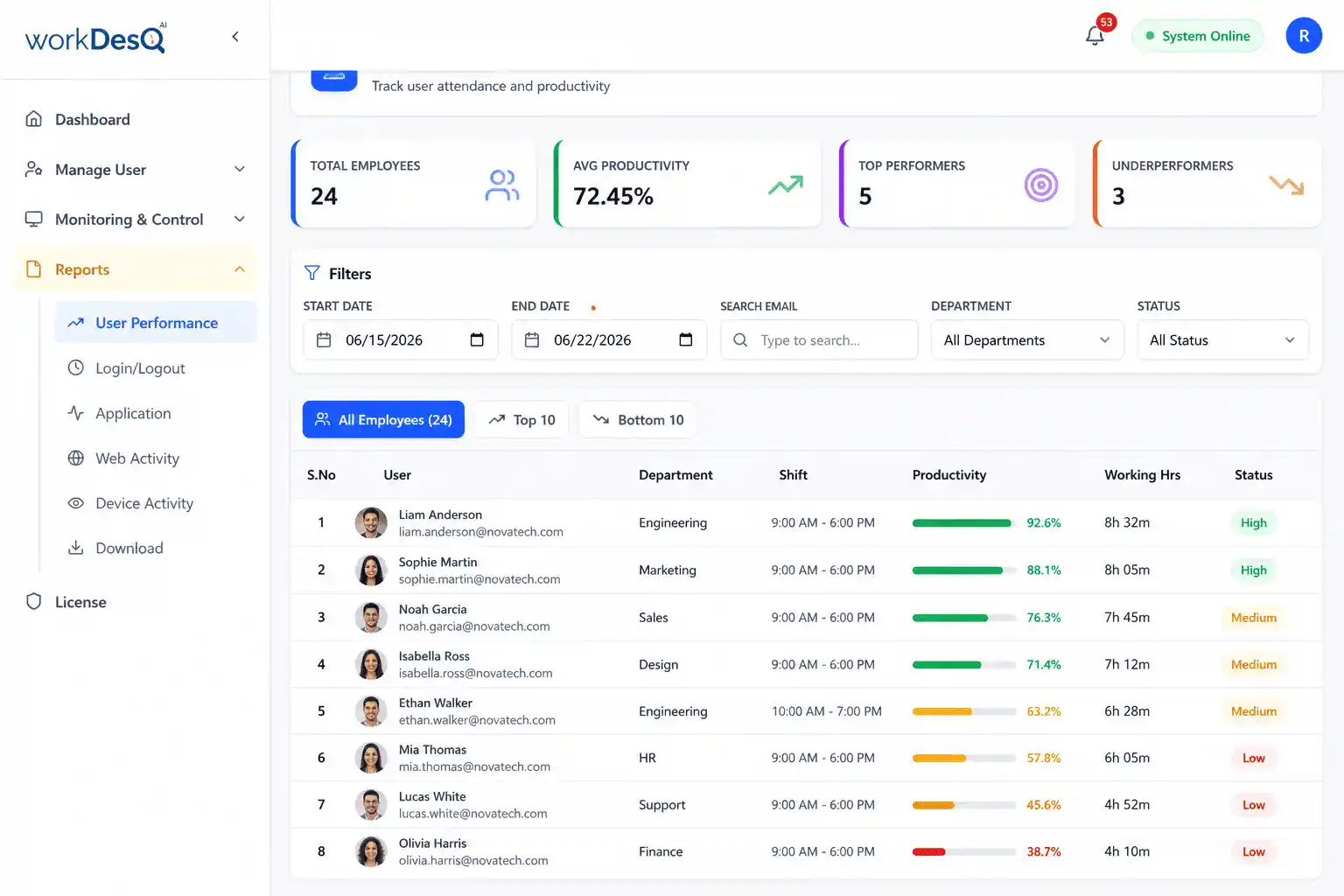
Time Tracking
Check employee time to see who is working after shift hours and you can ask them about their work
Employee productivity reports
View productivity trend reports and quickly notice which employee’s productivity starts to decline. and ask them calmly why.
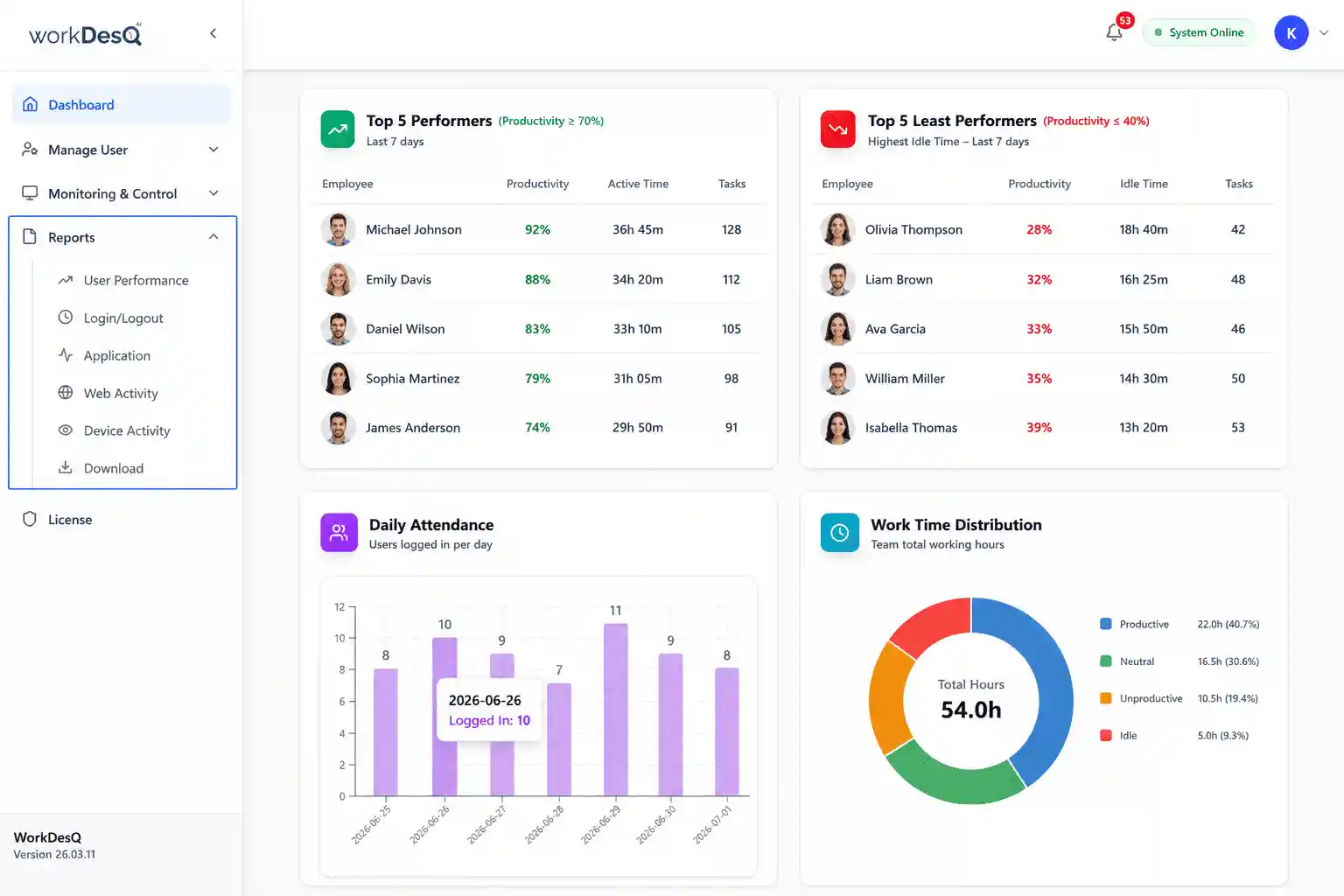
Real time reporting
Monitor workload and performance with live reports
Attendance tracking
You can check which employees take regular sick leave. After identifying them, you can ask the reasons.
WorkDesQ helps both employees and businesses because it provides transparency and builds trust.
Employee Work Monitoring Software
Turn workload data into better decisions with WorkDesQ.
Conclusion
The effects of heavy workload on employees are not just about feeling busy all the time. When employees face unrealistic expectations and excessive responsibilities, then comes with stress, burnout, poor health and high employee turnover. These problems are not only for one employee, they affect team performance, client satisfaction and the overall business.
To create a healthy workplace, it should be planned well, fair workload distribution, open communication and respect employee wellbeing. Managers should review workloads on a regular basis like weekly or monthly and provide right solutions.