See Productivity in Real Time.
Monitor employee activity, track work hours, and improve team efficiency with powerful insights.
Many companies reduce labor costs because of financial problems, economic slowdowns and operational changes. In those cases, companies usually choose furlough or layoff options.
HR teams and employees are often confused because both cases involve work interruption but their impact is not the same.
It is very important to understand furlough vs layoff for employees, managers, HR professionals and business owners. One option is temporary and the other option is permanent. Salary, benefits, job security and future employment opportunities can all be affected.
In this guide you will learn
- Real difference between furlough vs layoff
- How furloughs and layoffs affect employees
- Benefits and salary changes
- RIF vs layoff vs furlough
- Real workplace examples
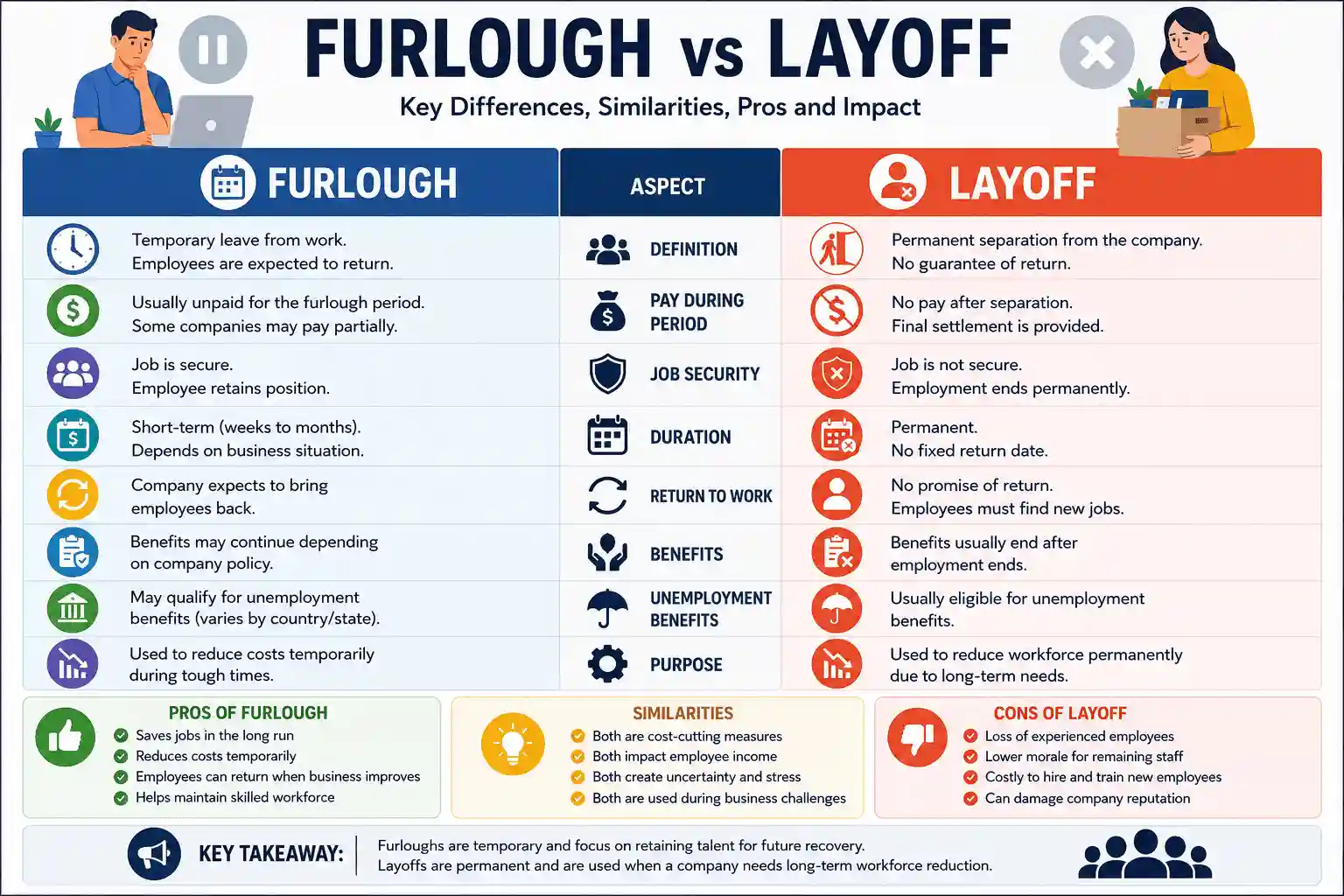
Define Furlough vs Layoff
Furlough is a temporary unpaid leave where the company stays connected with employees. Layoffs are permanent job terminations because of business reasons.
The big difference between furlough and layoff is that furloughed employees stay connected with the company and may return later. In a layoff workers are removed from active employment and may not return to the company. Many people search for layoff vs furlough because they want to understand it better.
- About job security
- What is the salary impact
- Understand chance of employment in future
What Happens in a Furlough?
- Employees may stop working for some time
- Salary may stop there for short period
- Health benefits may still continue but it totally depends on company policy.
- Employee may return to work when business improves
- Employees may still remain part of the company.
- Employees may feel uncertain about their future job situation
- Furlough periods can last for a few weeks or several months
When Companies Using Furlough
- Seasonal slowdowns for a short period.
- When a company does not have enough budget.
- Public emergencies
- Temporary business closures
- Sudden drop in client demand
- Government restrictions or lockdowns
- When businesses are waiting for market conditions to improve
What Happens in a Layoff
- Employees stop working permanently.
- Salary ends immediately
- Company benefits stop
- Employees get only remaining amount
- Employees start searching for new jobs.
- Employee morale and workplace culture may be affected after layoffs
- Employees may lose company email and internal communication access
- Companies may arrange exit meetings with HR teams
- Remaining employees get confused and raise questions about job security
When Companies Using Layoff
- Economic slowdown
- Companies want to reduce business expenses.
- Permanent closure of a department or office.
- Loss of clients or projects
- Outsourcing work to other companies
- New technology replacing manual work
Quick Comparison Between Furlough vs Layoff
| Factor | Furlough | Layoff |
|---|---|---|
| Job Status | Employee still stays connected | Employee usually loses the job |
| Salary | Pay may stop for some time | Salary stops completely |
| Employee Benefits | Some benefits may continue | All benefits may stop |
| Time Period | Usually for a short time | Can be permanent |
| Chance to Return | Employees may be called back | Return is not guaranteed |
| Company Purpose | Save money for a short period | Reduce long-term business costs |
| Employee Stress | Creates temporary worry | Creates serious job uncertainty |
| Hiring Cost for Company | Company can save rehiring costs | Spend more money hiring again later |
Layoff vs Furlough from an Employee’s Point of View
During furlough
- Workers may need to manage temporary income loss
- Employees often wait for business conditions to improve
- Career plans may pause for a short period
- Some employees may take temporary freelance or part-time work
- Employees may stay hopeful because their position is not fully removed
During Layoff
- Employees need to search for new jobs immediately.
- Monthly financial planning becomes so difficult
- Employees need to learn new skills for future jobs
- Families may also feel financial stress after a layoff
- Employees may need to rebuild their professional network
- Remaining employees in the company may also worry about job security
Furlough and layoff both can create stress but layoffs are more stressful because employees have to start new jobs in other companies.
Pros and Cons of Furloughs
Here are some advantages of furloughs
- Companies can save money for a short period of time.
- Employees may still get some benefits from the company.
- Employee can return after recovery
- Companies cannot leave their trained worker for a long time
Some Disadvantages
- Employee stress may increase.
- Temporary loss of income
- Productivity may go down during furloughs
- Employee morale becomes lower
Pros and Cons of Layoffs
Advantages
- Reducing long-term labor expenses.
- Easy for business restructuring
- Improving financial control
- Business owners may recover from financial losses.
- Remaining amount may be invested in new technology
- Companies remove duplicate roles
Disadvantages
- Companies lose experienced employees
- Damage company reputation
- The remaining employees’ morale goes down.
- Future rehiring costs may increase.
- Time wasting for training new employees
- Workload increases on remaining staff
Which Is Better: Furlough or Layoff?
Furlough is better when
- Business problems are temporary
- Companies expect recovery from financial loss.
- Business owner wants to avoid permanent job cuts
- Employers want to cut costs without losing talented employees.
- Employers want to maintain team stability
- Workload is expected to reduce after some time.
Layoff Is Better When
When employers know they cannot recover from financial problems.
- Department close permanently
- Companies are reducing workforce size permanently
- Some locations, stores, or offices are shutting down
- Demand for products or services has dropped permanently
- Outsourcing is replacing internal teams
Common HR Mistakes During Workforce Reduction
HR teams should carefully manage workforce changes and here are some mistakes to keep in mind.
- Poor communication
Employees may get confused when HR does not clearly explain the difference between furlough and layoff.
- Legal compliances problems
When HR ignores labor laws during layoffs or furloughs companies may face compliance issues.
- Lack of Employee support
Companies may not provide clear timelines, benefit information, HR assistance and career support.
- Delayed Communication
Late communication will increase employee anxiety and workplace rumors
How HR Teams Should Communicate Furloughs and Layoffs
- HR should share written policies and important details about furlough and layoffs
- Explain salary and full and final settlement information
- Answer employee question in respectful way
- Avoid sudden announcements with proper explanation
- Give employees enough time to understand the difference between furlough and layoff policies.
- Use very simple language so everybody can understand
- Offer contact details for HR support and future questions.
- Speak professionally during meetings
Final Thoughts
Understanding furlough vs layoff is important for HR professionals, business owners and employees Companies reduce labor costs and this also negatively affects employee finances.
In both cases employees leave employment but furlough is temporary and layoffs are permanent. Companies should carefully evaluate financial conditions, business goals and employee impact before deciding on furloughs and layoffs.
Employees should also understand their rights, benefits and future job options during workforce changes.