See Productivity in Real Time.
Monitor employee activity, track work hours, and improve team efficiency with powerful insights.
Finding the ideal duration for a performance review is important for both employees and managers because if the review time is too short then employees feel that the manager cannot evaluate their performance fairly.
If the performance review meeting takes too long employees feel bored, lose focus and both employees and managers feel mentally tired.
Generally, the ideal time for a performance review is 30 to 60 minutes but it also depends on the employee’s role and the discussion in the meeting.
How Long Should Different Types of Performance Reviews Be?
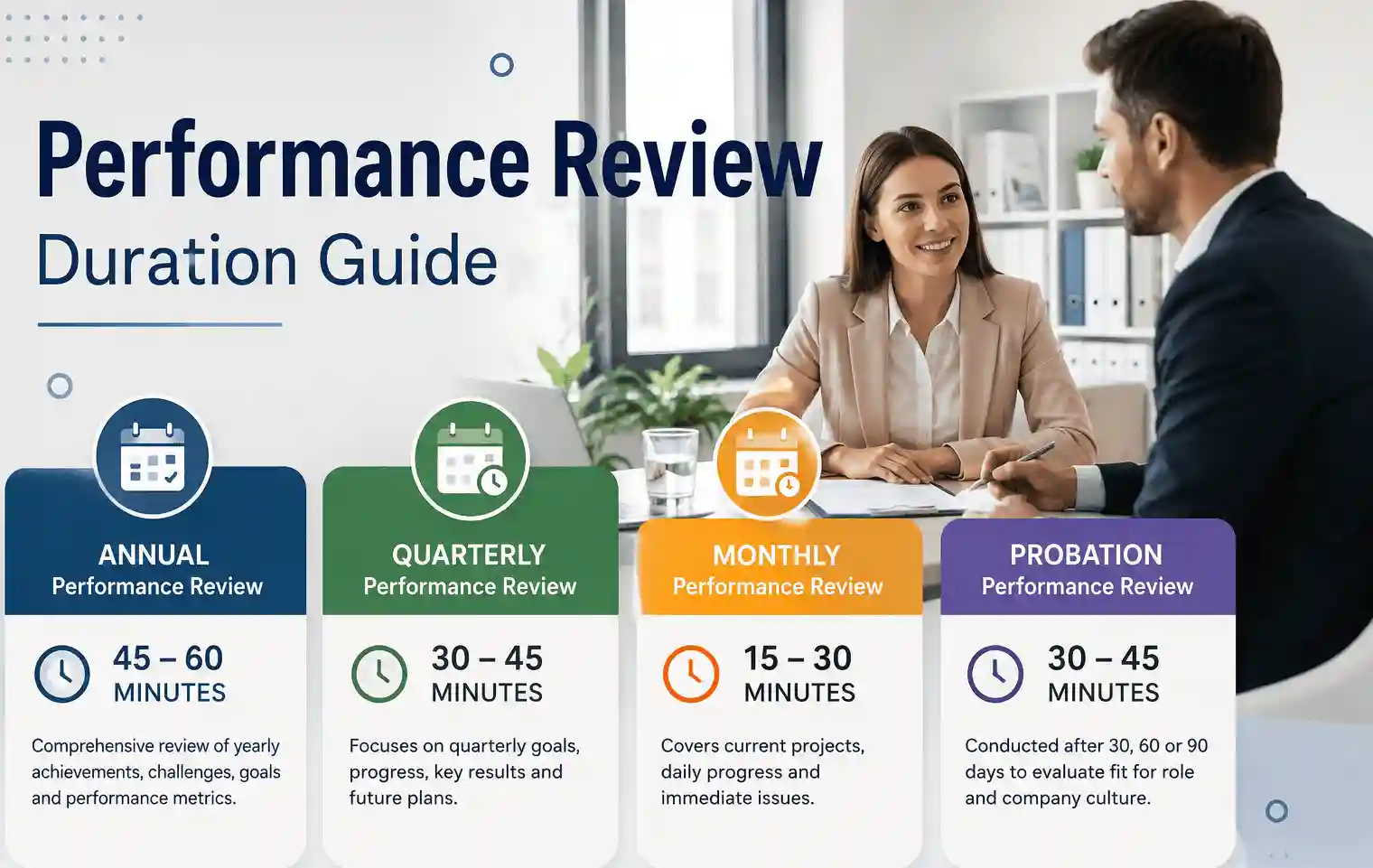
Every organization has a different review cycle and a different review duration.
Annual performance review
Ideal length is 45 to 60 minutes
In an annual performance review the manager checks the employee’s yearly achievements challenges goals and performance metrics, because these things connect with salary increment, promotion and long-term career planning that is why the manager takes 45 to 60 minutes
Quarterly Performance Review
Ideal length: 30 to 45 minutes
A quarterly performance review is important because it divides the yearly goals into 90 days and includes less data than an annual review that is why it takes around 30 to 45 minutes and discusses future plans
Monthly Performance Review
Ideal length: 15 to 30 minutes
A monthly performance review includes discussions about current projects and immediate issues.
Probation Performance Review
Ideal length: 30 to 45 minutes
A probation performance review is normally conducted after 30, 60 or 90 days. In the review the manager checks whether the employee is suitable for the company role and culture that is why a probation performance review takes 30 to 45 minutes
Recommended Performance Review Time by Employee Role
| Role | Time | Discussion | Why Time Takes |
|---|---|---|---|
| Entry Level | 30 to 45 minutes | Work quality, attendance, daily performance and skill development | Enough to cover their growth and role |
| Mid-Level Employees | 45 to 60 minutes | Project results, teamwork, productivity and career growth | It requires more detailed discussion |
| Senior Employees | 60 minutes | Leadership, business impact and achievements | Review should include strategic performance and future objectives |
| Manager and Team Leader | 60 to 90 minutes | Team performance, leadership skills and employee engagement | Managers are responsible for both their own performance and team performance |
What Affects the Length of a Performance Review?
Some general guidelines are helpful but there are some actual performance review factors
- Employee Performance History
When employees perform well consistently then review time can be less and focus on future growth opportunities but If employee performance is not good then it takes time for discussing improvement plan
- Number of Goals to Discuss
If an employee has 2 or 3 goals then review usually completes quickly, but if there are many KPIs and projects then performance can be longer
- Experience level
Review time can be longer or shorter depending on the employee’s experience because less experience employee has less goals and experienced employee have more goals
- Review Frequency
If the manager conducts reviews once a year, they naturally take longer because it covers the entire one year’s work. If review regularly then like weekly, monthly, quarterly and half yearly then reviews become much shorter
- Performance Issues or Improvement Plans
When company uses a Performance Improvement Plan (PIP) then it is important to give proper time because the manager explains clear expectations and shares helpful examples.
Ideal Performance Review Meeting Agenda
A well-structured review meeting is more effective and productive because it focuses on discussion and does not miss any important point.
Welcome and Purpose (5 minutes)
Start your meeting with a positive attitude and welcome any employee in the meeting and clearly explain the purpose of the review meeting and the topics that will be discussed because it feels employee comfortable and start conversation smoothly
Review Previous Goals (10 minutes)
Review the goals that were set in the previous meeting and discuss whether they achieved them or not and also talk about negatively and positively impacted on employee overall performance
Talk About Challenges (10 minutes)
Every employee faces challenges and, in this section, the manager discusses the challenges and how to achieve goals and also discusses support.
Setting new Goals (10 minutes)
Based on the discussion the manager decides new goals and suggest right direction
Questions and Closing (5 minutes)
At the end of the meeting the manager needs to give employees a chance to ask questions and ensure they understand your expectations.
Signs Your Performance Review Is Too Short
If performance review ends quickly then some important points may be missed
- Vague next steps
Employees do not understand the clear action plan and future goals
- Unanswered questions
Employees do not get enough time to ask questions and get answers
- One way communication
Only the manager talks in the meeting and employees do not get a chance to share their views
- Lack of depth
Feedback is limited to general statements without practical examples and proper guidance
Signs Your Performance Review Is Taking Too Long
- Repeat one topic again and again in the meeting
- Discussing points which is off topic
- Managers and employees feel tired and see clock or lose focus
- The meeting runs too long and delays other scheduled meetings
- Too much focus on small issues that are not important
- Too many unnecessary discussions between the manager and the employee
- Searching for important information during the meeting
Common Mistakes That Make Reviews Too Long
- No preparation from manager and employee side and start meeting with random topic
- Trying to cover too many topics in one discussion meeting
- Reviewing performance without evidence and data like on assumptions
- The manager keeps repeating the same feedback
- Unnecessary interruption during like taking calls or checking emails
- Lack of employee participation in the performance review meeting
- Not focusing on future goals for growth opportunities
Tips to Keep Performance Reviews Effective
- Manager and employee should prepare before meeting
- Reviews should be based on performance data not on assumptions
- Focus on key objectives
- Encourage two-way communication
- Appreciate previous employee achievements
- Provide full support like training and sessions for next steps
- Talk about strength and improvement areas
How WorkDesQ Supports the Performance Review Process
WorkDesQ is a well-known software that tracks employee performance automatically and managers do not need to put in extra effort for performance reviews. It also saves time for managers and reduces long meetings because it provides structured data.
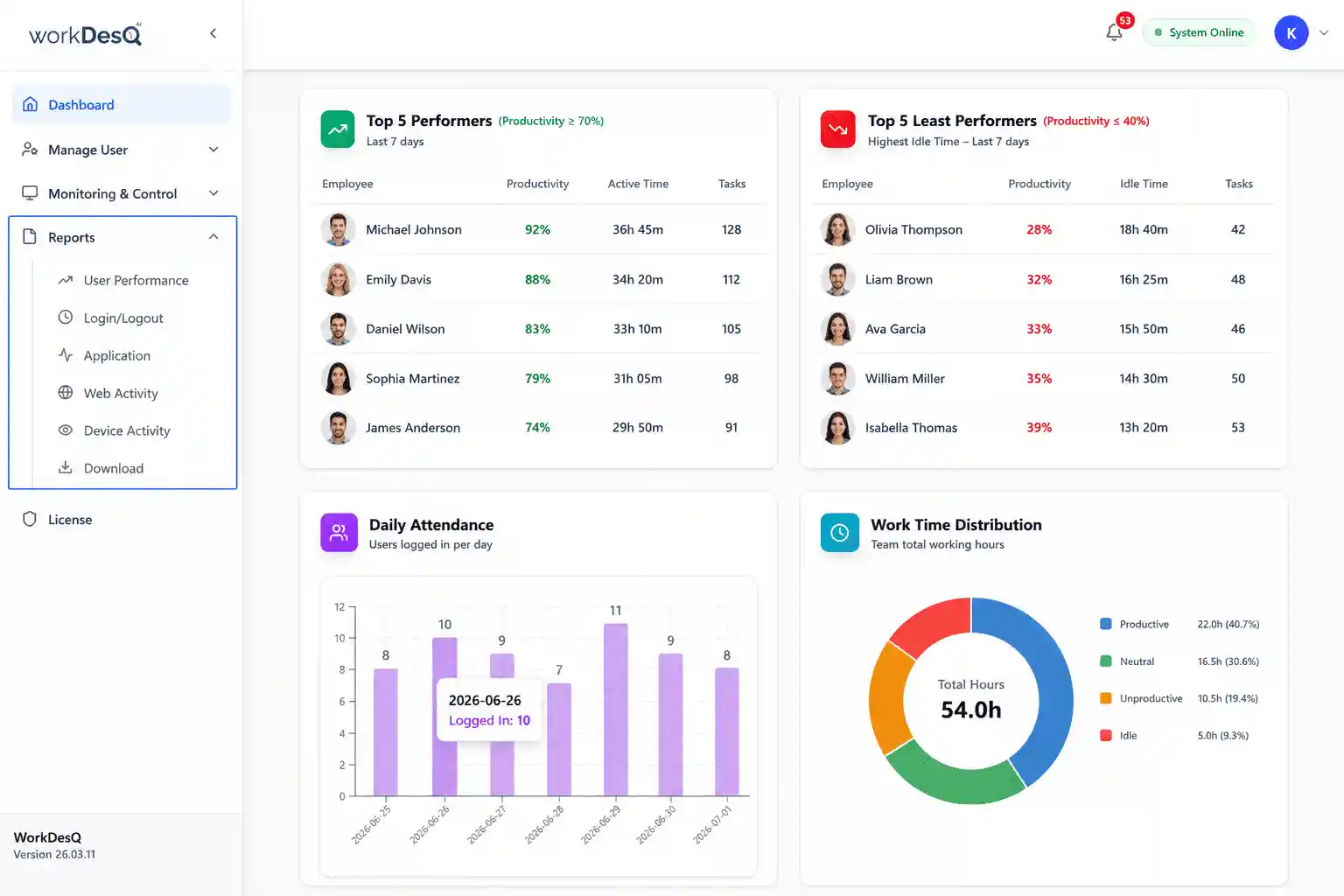
Manager can view employee productivity easily and understand through charts and graphs
- Record work hours
Get full report of employee login and logout and total working hours of an employee
- Measure performance with real data
WorkDesQ provides real data, managers can use this data for feedback
- Save manager time
All important performance data is available in one place and Managers do not need to create extra Excel sheets or PDFs
- Encourage fair reviews
WorkDesQ provides accurate work data and managers can make easy decisions based on it
Have questions about WorkDesQ or need technical assistance?
Conclusion
The length of a performance review depends on many factors like quality discussion, explaining goals and previous achievements etc. The ideal situation is when the manager gives clear feedback, sets clear future goals and the employee gets a chance to share their views.
If you plan the performance review time according to the employee’s role, type of review and topics the review becomes much better than the formal process. This becomes an important tool for better communication and long-term business growth.