Every company wants growth and higher profits every year. Leaders within those companies crave performance, and every team craves clarity. Many companies still face problems like late work, unclear roles, low interest from employees and uneven results.
But more often than not, the problem isn’t talent or strategy; it’s a lack of structured workplace accountability. Therefore, leaders and senior leaders want to understand why accountability is important in the workplace.
If you are an HR manager or business owner then this blog is for you. Here we will cover the topic.
- Workplace accountability fundamentals
- real accountability examples
- Accountability and leadership connection
- Psychological and cultural impact
- Measurable business outcomes
- Frameworks for implementing accountability
- Leadership accountability systems
- Remote team accountability strategies
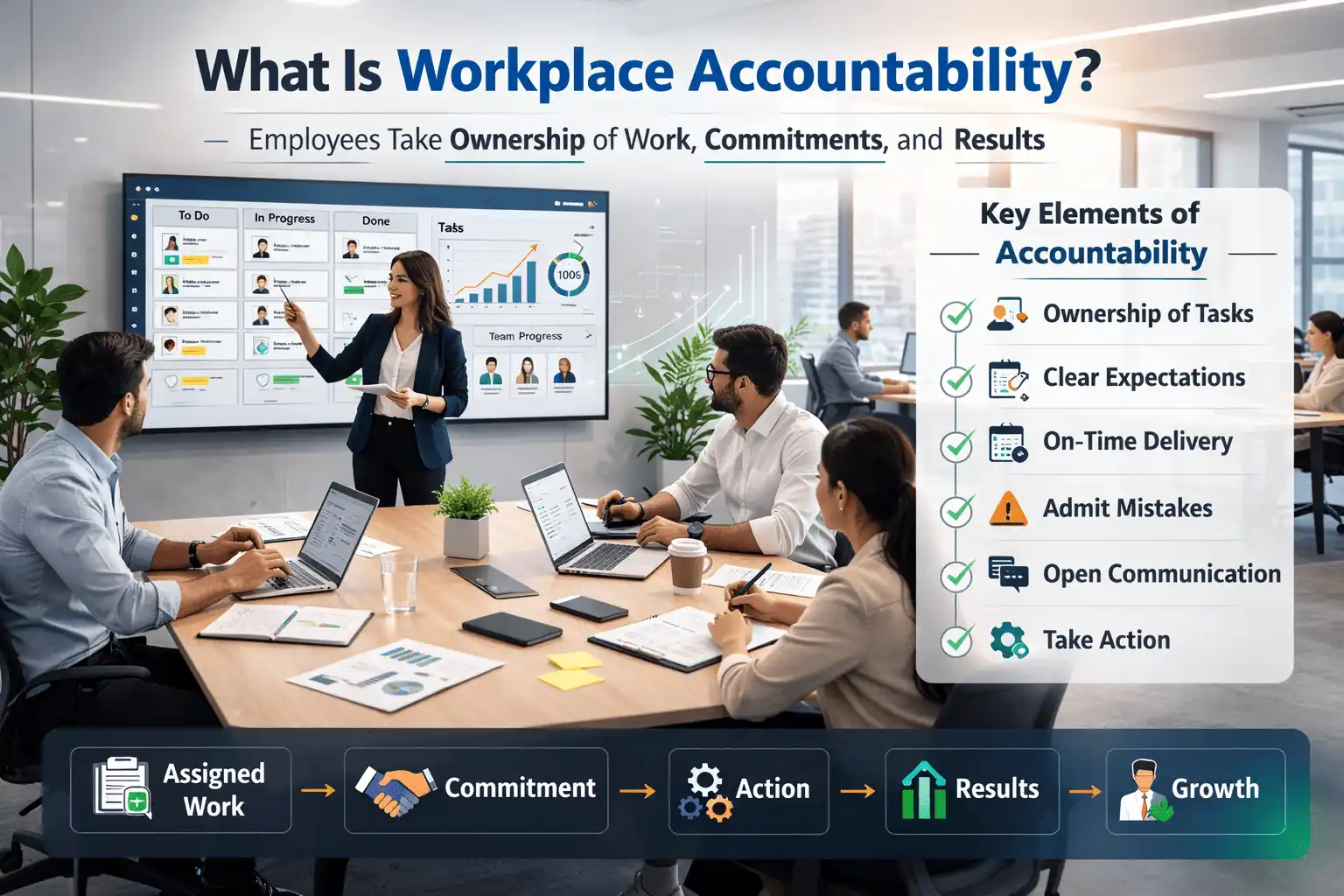
What Is Workplace Accountability
Workplace accountability means when employees take ownership of their work, their commitments, their behavior, and their decisions. Accountability, in a simple way, means:
- Owning assigned work
- Being accountable for results
- Meeting deadlines consistently
- Admitting mistakes
- Maintaining transparent communication
- Taking action without exception
When a team combines all these strengths it becomes a high performing team and that is why accountability is important in the workplace.
Accountability vs. Responsibility
| Responsibility | Accountability |
|---|---|
| Work given to a person | Answer for the final result |
| Can be shared with many people | Usually one person is answerable |
| About completing the task | About the success or failure of the task |
| Task focused | Result focused |
Benefits of Accountability in the Workplace
Understanding where a company or team is performing well shows why accountability plays a major role in the workplace. Here are some of its top benefits why accountability is important in the workplace:
Improves productivity
Strengthens leadership credibility
Builds high trust in teams
Reduces workplace conflict
Drives measurable business growth
The Psychology Behind Accountability at Work
There are three key reasons why accountability works in any workplace.
The Ownership Reason
Managers place greater value on employees who take ownership of their work.
The Visibility Effect
Performance that is visible automatically improves.
Expectation Clarity
Clear expectations reduce stress and improve focus.
These three psychological reasons also make accountability important in the workplace.
Accountable Leaders Build Strong Company Culture
Leadership accountability is the most powerful predictor of accountability in the workplace. Accountability leadership includes:
- Publicly admitting mistakes
- Protecting the team
- Delivering on your promises
- Taking responsibility for failed tasks
When leaders set an example of accountability, teams automatically follow that leader. A good leader sets the standard in the workplace and shows why accountability is important.
Real-World Accountability Examples
Example 1 Project Management
A project manager promises to deliver a feature in 30 days.
In the middle of the project some technical problems happen.
Instead of blaming others the manager informs the team early about the risk and adjusts the plan.
This is a clear example of accountability.
Example 2 Sales Target Ownership
A sales head misses the quarterly target.
Instead of blaming the market the sales head studies what went wrong and prepares a new action plan.
This shows accountability at the leadership level.
Example 3 Remote Work Accountability
A remote employee updates daily work progress on a shared dashboard.
If there is a delay the employee informs the team in advance.
This builds trust and shows accountability without strict control.
What Happens When Accountability Is Missing
When accountability is missing in the workplace, nothing feels structured in the company.
- Deadlines are missed
- Unnecessary meetings increase
- Excessive follow-ups are required
- Team morale plummets
- High performers become disengaged
Accountability silently acts as a backbone for team performance. To prevent these losses, accountability is important in the workplace.
4 Steps to Build Accountability in Strong Companies
1 Define Clear Ownership
Every task should be accountable to an employee because ownership without shared responsibility creates confusion.
2 Set Measurable Outcomes
Describe how the results of this task will be measured.
revenue targets
project milestones
customer satisfaction
3 Create Transparent Tracking Systems
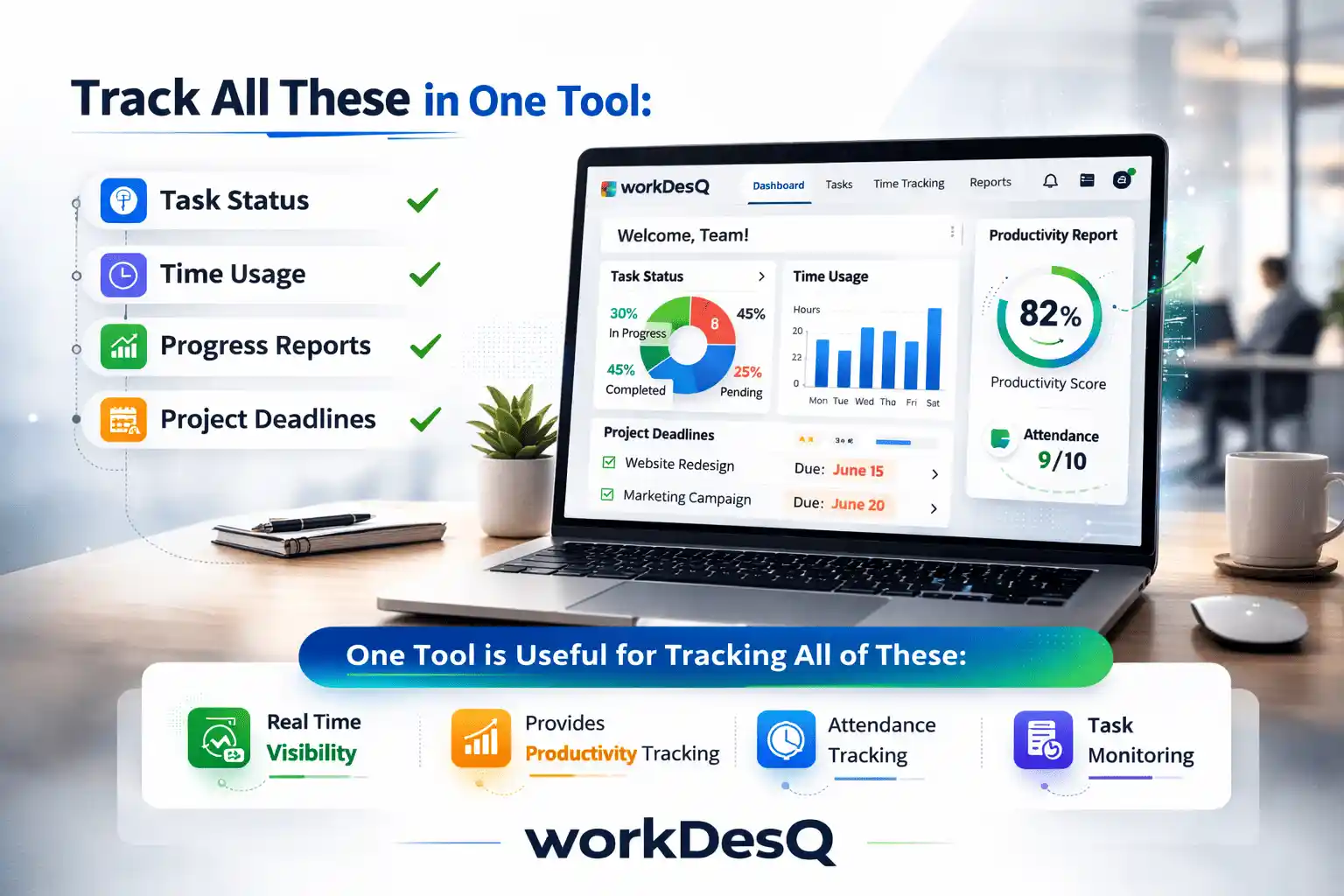
Accountability is what strengthens the visibility of any task. Include the following:
Task status
Time usage
Progress reports
Project deadlines
One tool is useful for tracking all of these: our WorkDesQ work monitoring software, which gives you
Real time visibility
Provides productivity tracking
Attendance tracking
Task monitoring
It allows you to track easily without micromanagement and this software also supports accountability.
4 Review and Optimize
Always conduct a weekly review.
What is the task completion rate?
Will the deadline be met?
How is performance going?
Ownership behavior.
Once you implement these four steps, you will realize the importance of accountability in the workplace.
Accountability in Remote and Hybrid Workplaces
Remote or hybrid work increases flexibility and reduces physical visibility, making accountability crucial in remote or hybrid work.
- Set daily or weekly deliverables
- Define measured KPIs
- Use structured reporting
- Maintain a transparent dashboard
Since hybrid and remote work mostly involves working from home, accountability becomes important to ensure everyone performs their work accurately and takes responsibility for their work. For more detailed information on how to monitor employees working from home we have a detailed blog on this topic.
Common Myths About Accountability
Accountability Means Micromanagement
Truth: Accountability gives clear roles and gives people freedom to do their work.
Accountability Creates Stress
Truth: Stress comes when goals and rules are not clear.
Accountability Is Only for Poor Performers
Truth: Good performers do even better when there is a clear system of accountability.
How To Calculate Accountability in the Workplace
You cannot measure accountability directly.
But you can calculate it using clear numbers.
Here is a simple way to do it.
1 Task Completion Rate
AccountabilityScore= (TasksCompletedOnTime/TotalAssignedTasks)×100
Example
If 20 tasks were given and 16 were finished on time
Accountability Score = 80 percent
2 Commitment vs Delivery
DeliveryRate= (DeliveredWork/PromisedWork)×100
This shows how much work a person delivers compared to what they promised.
3 Ownership Score
You can check:
- Does the employee follow deadlines
- Does the employee inform when there is a problem
- Does the employee give solutions instead of blaming others
Give each point a rating from 1 to 5.
Take the average to get the score.
4 Attendance and Punctuality
Late coming, absence, and leave pattern also show accountability.
Overall Accountability Formula
Overall Accountability= (TaskScore+DeliveryScore+OwnershipScore)/3
Important
Accountability is not only about numbers.
Clear roles, responsibility, and communication are also important.
Final Thoughts on Workplace Accountability
Any company needs employees to grow and if employees work without accountability the company does not benefit from it no matter how many they hire. It is the responsibility of a manager HR or business owner to first understand what accountability is and why it is important in the workplace. We hope that we have explained this with good examples. Workplace accountability transforms
- strategy into execution
- transforming talent into performance
- teams into aligned systems
- leadership into credibility
Finally, the role of accountability in the workplace is not control but clarity.