See Productivity in Real Time.
Monitor employee activity, track work hours, and improve team efficiency with powerful insights.
Dual employment is a major concern in India especially when employees do work from home jobs and freelancing. That is why some employees take dual jobs without informing their employers. Employees start dual employment to earn extra income but without informing companies it can create serious problems like productivity issues and confidentiality risk. That is why punishment for dual employment in India is very strict. It may include:
- Written warning and disciplinary action
- Loss of bonuses and other incentives
- In some cases, employer recover their amount
- Legal action for confidentiality violation
- Professional image reputation damage
What Is Dual Employment? Know the Rules!
Before knowing about the punishment for dual employment in India, it is significant to understand the meaning of dual employment. This means that a worker works for 2 separate companies at the same time, specifically during clashing work hours. Most firms tend to consider this thing as a violation of employment agreement(s) as this might lead to conflicts of interest, lower work productivity of that employee, and even leak sensitive business info. These days, there is a buzz about such dual employment and moonlighting in India as remote working models & hybrid work environments have normalised so much in most corporate settings.
Is Dual Employment Legal in India?
A very common query that most workers in India have is whether they can hold 2 jobs legally at the same time. The reply to this is not very simple. India does not have any single law, which totally bans such dual employment for all workers. But multiple state laws, several employment contracts, different company policies, as well as various industry regulations tend to restrict workers from working for 2 employers simultaneously without prior permissions. The legality usually depends on the following:
- T&C of the employment contract
- Internal company policies
- Documented employment rules & guidelines
- Nature & scope of taking up a secondary employment
- Working hours, scheduling & potential conflicts
- Industry-specific laws, regulations, & compliance needs
So, whether or not such dual employment would be allowed for you, largely depends on your particular case as well as your employers’ specific needs.
Dual Employment in India Laws Risks & Key Rules
Various employment laws & regulations in India govern these practices. Certain state Shops and Establishments Acts tend to restrict workers from working in more than 1 place at the same time. Most firms even include exclusivity clauses in their employment agreements. Crucial factors under dual employment labor law in India include the following:
- Duty of loyalty & good faith towards employers
- Protecting sensitive, confidential, & proprietary info
- Preventing & managing conflicts of interest
- Compliance with company policies & employers’ employment contracts
- Maintaining expected work quality & performance standards
Workers must always review their existing offer letters and read their employment agreements very well before accepting any such extra work from an outside source to avoid the consequences later.
Practical Explanation of Dual Employment Policy in India
Most firms have specific rules & internal policies about holding second employment. For instance, in India, a typical dual employment policy in India might need workers to follow some guidelines, as mentioned below:
- Informing the employer about any external work commitments
- Getting prior written approval before taking up a second job
- Avoiding to work with competitor companies
- Maintaining work productivity standards and quality expectations
- Protecting sensitive confidential company info from getting leaked
Not following these policies could even result in serious disciplinary action against the worker, who had been flouting the laws.
Working for Two Employers? Risks & Consequences You Must Know
When an employee working for two employers does not disclose such a kind of work arrangement happening at his end, the business owner might see this as misconduct. The main risks involved here include the following:
- Breaching employment contract’s T&C
- Work quality getting reduced day after day
- Violating confidentiality & data protection obligations
- Conflict of interest impacting work responsibilities
- Loss of credibility, trust, & professional reputation
Business owners usually treat these cases very seriously as trust is a vital part of any employee-employer relationship and these are the same reasons that later lead to punishment for dual employment in India.
How Employers Detect Dual Employment in India
Many employees things that dual employment remain hidden but this is not true. Companies can detect dual employment through advanced methods like
- Employee background verification checks
- By checking PF records
- Payroll audits
- Using attendance monitoring system
- Tax related documents
- Internal investigation
For attendance monitoring system you can sign up here
Track attendance smarter and manage your team easily with WorkDesQ
Get started in minutes — no setup hassle.
Get Started Today – Free Trial
Limited-time onboarding benefits available
Tips for Employers to Prevent Dual Employment in India
Companies can reduce dual employment India by making clear policies and clear rules
-
- Create strong employment agreements
- Always conduct regular audits of employees
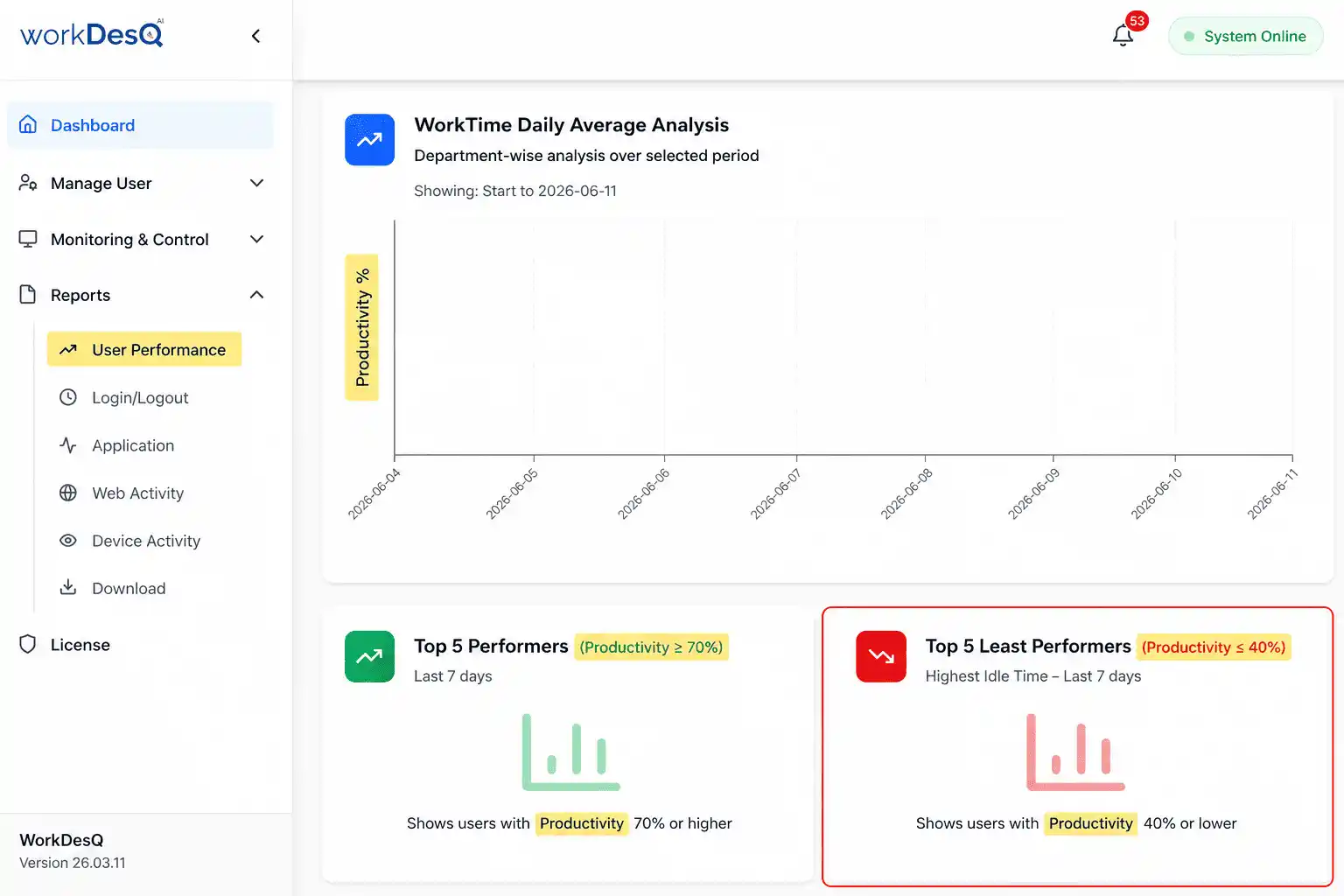
- Use workforce monitoring tools for checking their time spent during working hours
- Educate employees about punishment for dual employment in India
- Give freedom of speech so they can easily discuss about their side work opportunities
Could There Be a Penalty for Dual Employment in Private Company?
Yes. A penalty for dual employment in private company might come into play if the company’s policies clearly state that they forbid holding any such secondary position. Depending on the situation, business owners might take several actions, as under:
- Issue formal warnings for policy violations
- Conduct internal investigations for the matter
- Go on to recover some benefits if law permits
- Move on with some disciplinary actions in accordance to company policies
- Terminate the employment contract for serious violation
Eventually, the response to such a matter would depend on the agreement terms & company’s contract rules etc.
Can Termination Be a Punishment for Dual Employment in India?
Yes, most firms tend to consider undisclosed dual employment a serious form of misconduct. Termination for dual employment in India might happen under the following cases:
- The worker deliberately hid his second employment.
- The organizational policies have been evidently violated.
- There’s a clear conflict of interest.
- Some sensitive & confidential info has been leaked or exposed.
- Employee’s performance has been impacted greatly due to this.
Business owners usually conduct internal inquiries before taking any final call.
What Do Moonlighting Laws in India Say about 2nd Employment?
The debate around moonlighting laws in India has really grown considerably in the recent few years. Moonlighting actually means taking up extra work from outside resources at the same office hours. Some business owners might allow this in the following cases:
- Employee’s performance is not getting affected due to this.
- The employee disclosed the same to the employer before taking up the job.
- There is no such conflict of interest.
- Company policies permit this.
But unauthorized moonlighting could still give rise to legal, employment-related issues.
Tips for Employees to Stay Compliant & Safe While Managing Dual Employment?
To steer clear from any such troubles related to working for two companies at the same time in India, workers must do the following:
- carefully review all the employment contracts.
- Go through the company policies thoroughly.
- Obtain written approval before taking up any such extra job.
- Try to avoid any conflicts of interest.
- Always maintain full transparency with your employer.
A simple discussion with the management usually helps prevent any future complications.
Closing Lines
Comprehending the punishment for dual employment in India is crucial for all workers. Though Indian laws do not totally prohibit all such forms of secondary employment, still contracts & policies play a vital role. Violations can lead to warnings, disciplinary actions, & in the worst cases, even job loss. So, always be honest and transparent in your approach to avoid such serious consequences.
Are you seeking smart workforce management, worker tracking, attendance monitoring, & productivity solutions? Do visit WorkdesQ to check how modern-day business units could form transparent, compliant, & effective workplaces.