An HR or manager may think why these employees are absent so often what should I do so that their absenteeism gets reduced and they start coming to the office to work but they do not know how to stop absenteeism so let us tell you how to prevent absenteeism know about its causes and below we will talk about it.
Meaning of Absenteeism and Common Causes
The definition of absenteeism is quite simple. If an employee takes leave again and again without informing and does not come to work it is called absenteeism. There can be many reasons for this. Let’s discuss them below.
Health Problems
Health problems are a very common reason. Someone may have a physical issue mental health problem or chronic illness that requires long leave.
Work Life Balance Problems
We often see that family responsibilities require leave. Family responsibilities may arise requiring urgent leave. This problem is more common with married employees.
Low Engagement
This problem is often invisible but it often remains on the employee’s mind because absenteeism increases when they lose interest in working for the company and there can be many reasons for this.
Poor Management
This is also a very common problem. Absenteeism increases because many managers do not properly guide their employees leading to demotivation and disengagement.
These are some common reasons for increased absenteeism which are common in every company.
Tracking & Analyzing Absences
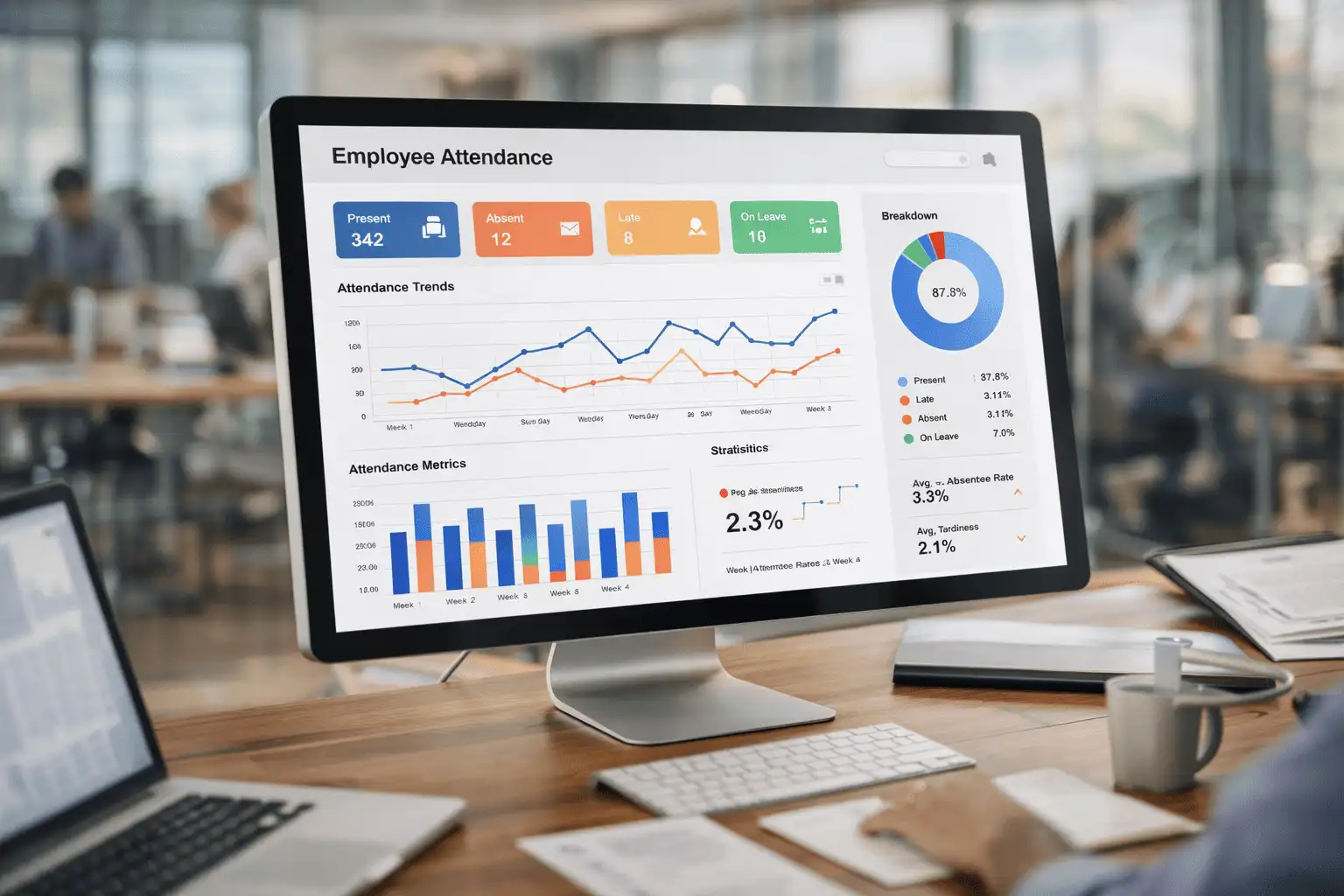
Tracking and analyzing absences is the first step in preventing absenteeism in the workplace. You might be wondering what to do to make it easier so we will tell you exactly what you need to do.
- Monitoring attendance
The best way to monitor attendance is through software as it is less prone to errors. You can easily extract data on those who are frequently absent. Our attendance tracking software is not just better it is affordable and easy to use.
- Workload imbalance
When employees in any department go on leave without prior notice the workload becomes unbalanced because their workload is passed on to other employees.
When you check your company records you will often find that employees are on leave suddenly impacting work.
Flexible Policies that Reduce Absenteeism
Flexible policies can reduce absenteeism because people nowadays prefer to work with flexibility and feel trusted by the company. You can provide employees with flexible policies by offering them options such as
Paid leave option
If employees have this option genuine sick people can take advantage of it and inform the company so that the company’s work can be adjusted accordingly.
Flexible work hours
In this employees can finish their personal work and then resume work thus avoiding absences.
Temporary adjustments
Life is not always the same. Life has ups and downs. For example if an employee needs to visit a family member at the hospital, they can visit them and return to the office without being marked absent. If there were a fixed policy they would be marked absent.
By making a flexible policy you can prevent absenteeism in the workplace.
Simple Steps to Reduce Employee Absenteeism
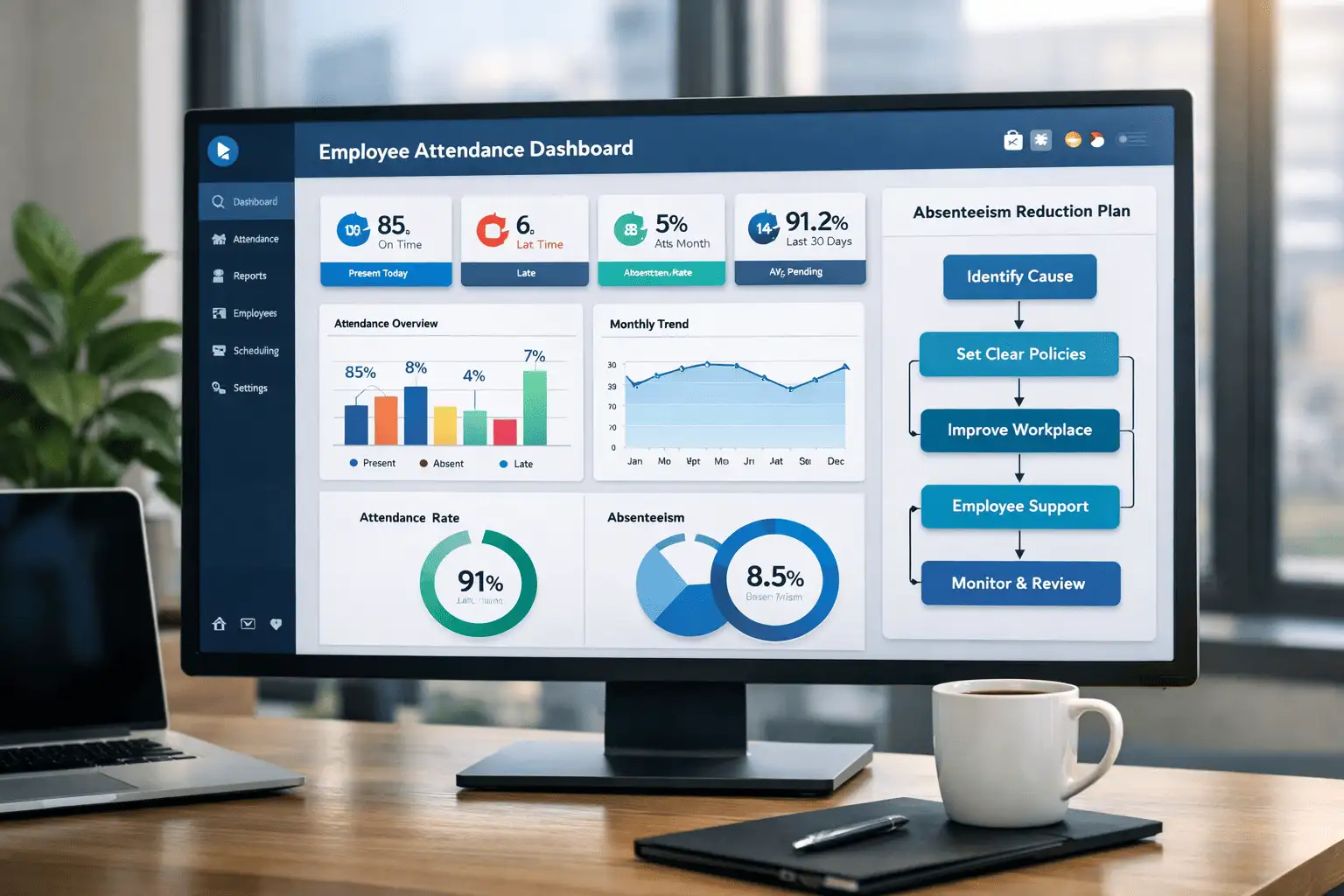
Step 1 Identify Frequent Absentees
With attendance tracking you can first identify who is regularly absent. You can easily see this on your dashboard.
Step 2: Understand Root Causes
Once you have discovered this employee is regularly absent find out why they are absent.
Step 3: Implement Targeted Solutions
Once you have identified the reason for their absence give them flexibility or if they are unwell encourage them to attend a wellness program.
Step 4: Set Goals & Monitor Progress
After that set goals to improve attendance. Meet with the employee and check their monthly tracking or reports.
Step 5: Reward Better Attendance
When their attendance improves and you have checked it in your report give them a small reward to motivate them.
If you follow all these steps you can easily reduce employee absenteeism.
Real Success Stories

Case 1: A logistics company introduced flexible schedules a wellness program and manager training. The result absenteeism decreased by 25%.
Case 2: A tech startup had high absenteeism on Fridays. Team building and hybrid work were allowed reducing absenteeism and improving satisfaction.
Case 3: At a manufacturing firm shift adjustments and overtime redistribution reduced employee stress and significantly reduced absenteeism.
You can also learn from these case studies how to prevent absenteeism in the workplace.
Extra Tips to Reduce Absenteeism
When you create a workplace where employees feel they have important work responsibilities and that their work will improve their team’s performance they will reduce their absenteeism.
Train Managers to Communicate Better
It is not always a medical or family reason. The manager can also be a reason as they sometimes act rudely with employees. Therefore managers must train employees on how to communicate and provide honest feedback.
Avoid Giving Too Much Work
This is a major reason employees take leave because their workload is too much and after a while they feel they are being treated unfairly.
Explain Company Rules Clearly
Unless you explain company rules clearly to someone whether it is an expected company policy or just a matter of time they will not know what to do. It is better to explain company rules clearly.
By following these tips you can easily prevent absenteeism in the workplace.
Lead with Empathy Not Punishment
More important than punishing absenteeism is understanding the causes and how to effectively address them. Absenteeism is usually a result of other problems but if left unaddressed it can become a major issue. The truth is these employees are the driving force of the company and if they remain absent or demotivated work will suffer. We hope you found our blog helpful and will implement it in your own company.