When you are an HR or manager in a company your job is to monitor the team and also know how to legally fire an employee. This decision is not based on emotions or anger. It is based on employee performance or behavior.
If these decisions are made illegally, they can lead to financial losses and damage to the company reputation, which can cause demotivation and lower employee morale. The employee then feels that their job is not secure. In this blog, we will explain
- What are the legal steps to terminate an employee?
- What documents are required?
- What are the best practices for legally terminating an employee?
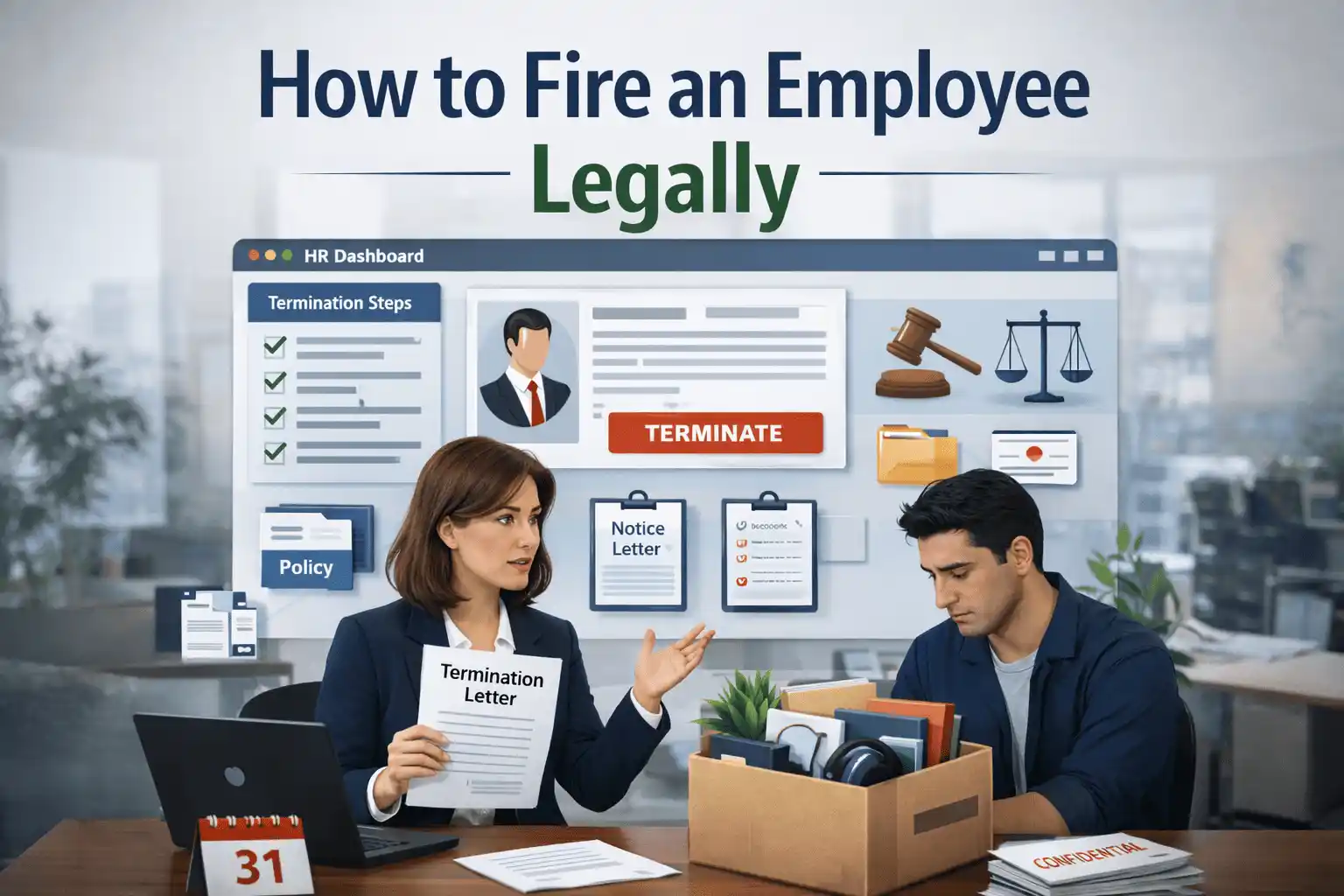
Reasons to Fire an Employee Legally
A manager or HR manager never terminates an employee without a valid reason because they are aware of the negative consequences. There are some legal reasons for HR or a manager to terminate an employee:
Poor Performance
When you see that an employee performance is poor and not improving for a long time even after giving support and warnings you can legally terminate the employee for poor performance. This is allowed when you have proper proof of low performance.
If you want to check and measure the performance of an employee in a clear and easy way you can use productivity tracker software. It helps you see work activity performance level and productivity records without manual work.
Misconduct
A legal reason for termination is when an employee steals, harasses another employee, or disobeys company policies.
Poor Attendance
When you notice an employee is absent for extended periods of time, fails to report to work, or goes on leave without permission, you can terminate them politely. If you have trouble tracking an employee’s attendance or need to manually track it, you can use our attendance tracking app, which automatically tracks attendance.
Layoffs
When an employee is not having any issues and is doing everything right, but the company is running at a loss, terminating an employee for cost reduction or department closure is a valid and legally enforceable reason.
Importance of Documentation Before Termination
Documentation is the most important part of employee termination because without proof termination can be illegal. HR or managers should keep these records:
- Attendance reports in detail
- Performance reports
- Warning letters
- Productivity reports
- Email and communication
If you do not keep these documents, the employee will think they are being unfairly terminated and feel unfairly treated. They may even go to labor court or file a case with a lawyer. Documentation always protects the company and satisfies the employee.
Steps to Fire an Employee Legally
Step 1 Know the Person Before You Terminate Them
Before you fire someone, you need to understand who you are going to terminate. Because if it is an executive level employee, you can handle it alone, but to terminate a managerial level employee, a lot of internal meetings have to be held with others.
Step 2 Check the Employment Contract
Then you will have to check his employment contract to see if he/she was on notice period or probation period because the legal steps for firing are different in both conditions.
Step 3 Collect Performance and Attendance Records
Record employee performance and attendance in a document for proof that you can show to the employee and it also protects the company from legal risks.
Step 4 Prepare the Termination Letter
- Why you are terminating
- Employee’s last working date
- Notice period details
- Final payment information
Always keep the letter professional and maintain confidentiality between you and the employee.
Step 5: Conduct Termination Meeting
Then you should have a meeting with the employee for their termination and give complete details in that meeting as to why he is being fired or you can also follow our given script
“We have reviewed your performance and previous discussions. Unfortunately, your performance has not improved. We have decided to terminate your employment effective today. We will explain your final settlement and next steps.”
Step 6: Provide Final Settlement
In this last step, you will get all his payments cleared from him like his final salary, pending amounts and leave balance payment or then take his signature on that document and call it full and final payment.
How Employee Monitoring Supports Legal Termination
There are many ways employee work monitoring supports legal termination like
- tracking employee productivity
- recording attendance
- tracking working hours
- generating performance reports
and it helps HR and managers to understand
- identify early issues
- provide fair warnings.
- make data-based decisions
- prevent legal risks
When Does Wrongful Termination Happen?
When a company fires an employee without just cause
- When procedures are not followed
- Discrimination occurs
- Contract notices are ignored
- Wrongdoing is not investigated
- Severance compensation is not paid
Therefore, if you follow these points, it will be wrongful termination as this would then fall under the category of wrongful termination.
Professional Termination Letter Structure
A professional termination letter is when an employee is terminated and formally notifies them of the termination. Its format should be simple and clear so that the employee can easily understand all the details.
- Company details
- Employee details
- A clear termination letter
- Reason for termination should be mentioned
- Final settlement details
- Company property return details should be mentioned
- Closing statement
- Employee signature should be mentioned
You can legally fire an employee by issuing this employee termination letter.
Common Mistakes to Avoid When Firing an Employee
Some common mistakes that HR managers and managers routinely make include:
Not creating any documentation
Not giving any warning before termination
Terminating due to a personal issue
Ignoring contract terms
Terminating without notice
If you’re making these mistakes, stop them, as they could expose your company to legal risk in the future.
Employee Rights During Termination
An employee has certain rights they can exercise during termination, such as:
- They have the right to have the company serve them a notice period.
- Employees have the right to receive final payment.
- Employees should be treated fairly during termination.
- Employees have the right to receive termination letter
Because when it comes to legally firing an employee, employee rights are considered.
Ending Note on Legal Employee Termination
When you do fire an employee legally, you need to document and follow the laws. HR or managers should first give a verbal warning and then issue a write up letter. If even then the employee does not improve, then you should legally fire the employee.
Legal termination gives protection to both the company and the employee. It ensures fairness and transparency and in this way the market value or reputation of the company will never be affected.
Legally terminating an employee is part of leadership qualities. A termination done correctly protects the company, while a termination done incorrectly always puts the company at legal risk.