See Productivity in Real Time.
Monitor employee activity, track work hours, and improve team efficiency with powerful insights.
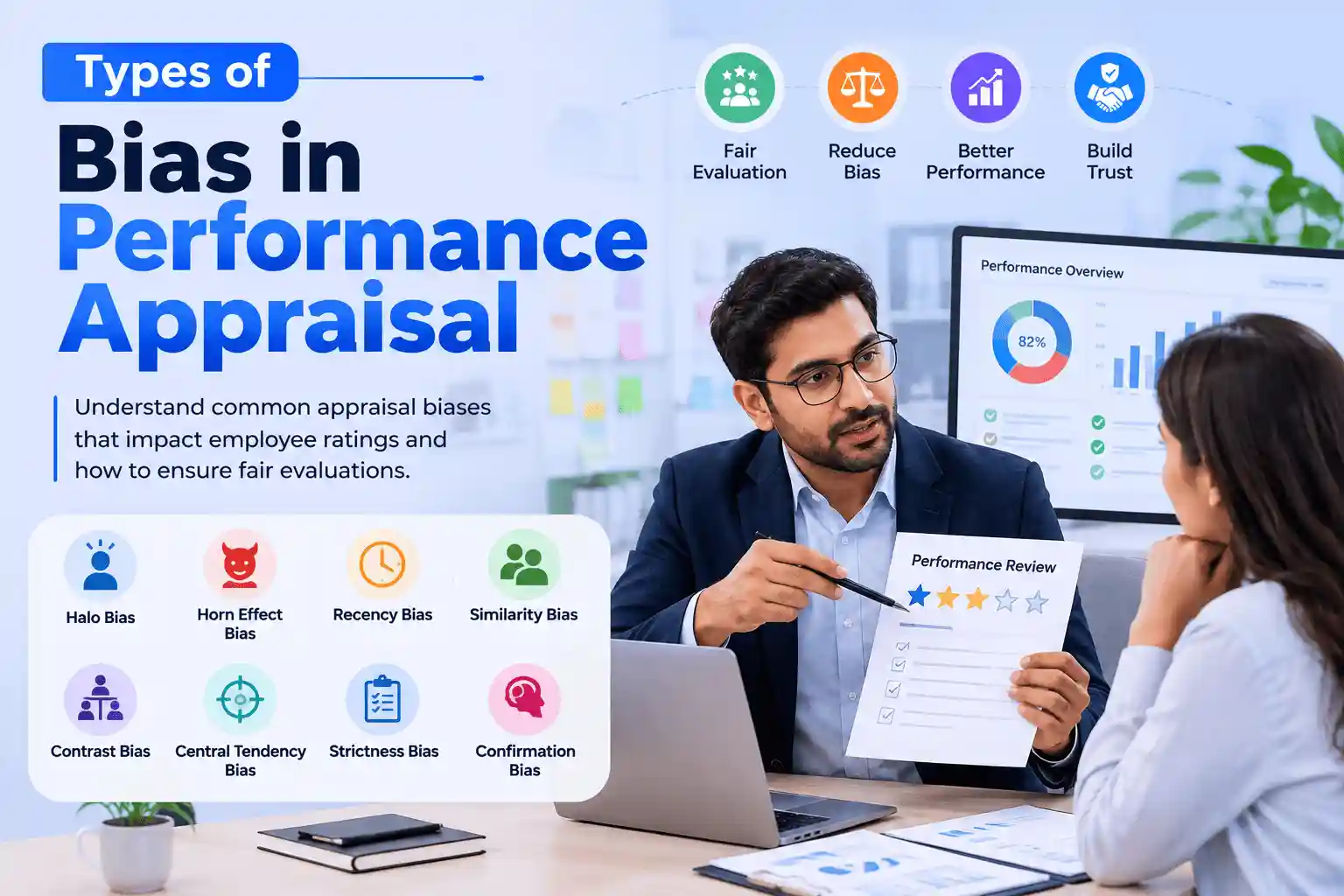
Types of bias in performance appraisal are mistakes that can happen when managers review employee performance. Instead of reviewing actual performance data, managers review employees based on personal feelings, recent events and mental shortcuts.
The most common types of bias in performance appraisal are
- Halo Bias
- Horn Effect Bias
- Recency Bias
- Similarity Bias
- Leniency Bias
- Strictness Bias
- Confirmation Bias
When a performance review feels unfair the reason is that the manager takes decisions based on recent events. If the company does not have a clear review process these quick decisions lead to unfair performance appraisals.
Types of Bias in Performance Appraisal That Affect Employee Reviews
- The Halo Bias
Halo bias happens when one employee does one thing well and the manager gives them high ratings in every category.
- Horn Effect
This is the opposite of halo bias. If an employee does something wrong in one category the manager keeps that mistake in mind and gives low ratings in all categories.
- Recency Bias
When a manager gives ratings based on recent events or last month’s performance and forgets the employee’s achievements during the whole year.
- Similarity Bias (The “Like Me” Bias)
In this type of bias the manager gives a high rating because they think they are similar in habits, work style and communication.
- Contrast Bias
Contrast bias happens when managers compare the employee with other employees’ work instead of job expectations and achieved goals.
- Central Tendency Bias
In this situation manager gives all employees performance reviews medium ratings because they do not give extra explanation why they give the lowest rating to HR
- Severity Bias (Strictness Bias)
Giving all employee lowest rating because they follow very strict standards rules
- Confirmation Bias
Confirmation bias happens when a manager forms an opinion in mind about an employee early on and then looks only for information that supports that opinion. Instead of reviewing the employee’s full year performance
Why Does Bias Happen During Performance Appraisals?
- Manager have to review so many employee performances at same time
- According to recent events they remember and they forget full year performance
- Company does not follow same rule for everyone
- Manager personal opinion affects employee performance reviewed
- Lack of performance data, company does not stored data of employee
- Not enough training for managers like how to give rating employee performances
- Not enough time review employee performance properly because fair performances reviews take time
- Happen bias when poor communication throughout the year
- Performance appraisals reviews happen based on emotions and feelings
Common Examples of Performance Appraisal Bias at Work
If you feel that always performance review happens with fair process then you should look some types of bias in performance appraisal examples
1- Example of Halo Bias
Situation – Alina was completed one project successfully and company get good result
What happen– Manager was too much impressed and high rating in all category like teamwork, communication and leadership instead of checking properly
Impact – Other employees get demotivated and feels unfair treatment
2- Example of Horn Effect
Situation – Daniel works good in whole year but he missed recently one meeting
What happen – Manager remember that mistake in mind and give low rating in almost all category
Impact – One mistakes destroy whole year performance and employee feels low confidence, it also affects on future promotions
3- Example of Recency Bias
Situation – Mary achieved their targets in throughout the year but last month performance was not too good
What happen – Manager give average rating on based on last month performance and ignoring throughout year performance
Impact – Employee not getting reward for throughout year high performance and feel that this is the unfair review for me
4- Example of Similarity Bias
Situation – Manager and employee both have similar work style and approach
What happen – Manager gives high rating without check their work and other employee works well
Impact – Other employee feels favoritism and this activity reduce trust from managers
Note – Every company has different examples but these common examples are happened in approximately in every company that we found
How Bias Affects Employees and Business Performance
| Impact | Affects Employees | Affects Business |
|---|---|---|
| Lower motivation | Employee stops putting extra efforts | Reduces team productivity and work quality |
| Loss of trust | Employees lose trust in their manager | Creates a negative work environment |
| Missed career growth | Employee may miss promotions | Company may promote the wrong employee |
| High employee turnover | Good employee leaves the company | Increases the cost of hiring and training new employees |
| Poor teamwork | Employees feel treated unfairly | Poor teamwork can delay projects |
| Slower business growth | Employees become less engaged | Poor performance decisions can reduce productivity |
How to Reduce Bias in Performance Appraisals
Performance appraisals are fair when managers review actual data instead of assumptions.
- Set Clear Performance Goals
Before starting performance appraisals decide clear goals so employees know what the manager expects.
- Maintain Performance Records
Maintain records of employee achievements and challenges throughout the year and do not depend on memory.
- Follow Same Rules for Everyone
Use same process for giving them rating like using performance tracker and reviews on database
- Focus on Facts Only
At time of reviewing performance appraisal check employee completed task, attendance records and goal achievement. Give real examples during feedback
- Take feedback From Multiple Persons
Take feedback from team leaders and coworkers because this shows actual picture of employee performance
- Allow Employee To Ask Questions
Allow employee to share their achievements and challenges and explain employees that about lower ratings
Common Appraisal Mistakes by Manager
Even with good intentions managers still make mistakes during performance reviews.
- Rating an employee based only on recent performance.
- Showing favoritism during reviews
- Comparing an employee with another employee who has a different role.
- Ignoring all achievements throughout the year.
- The manager reviews employee performance only based on mistakes.
- Using emotions and feelings instead of checking data
- Not using employee performance tracking software
- Making review only one time only
How WorkDesQ Helps Reduce Bias in Performance Appraisals
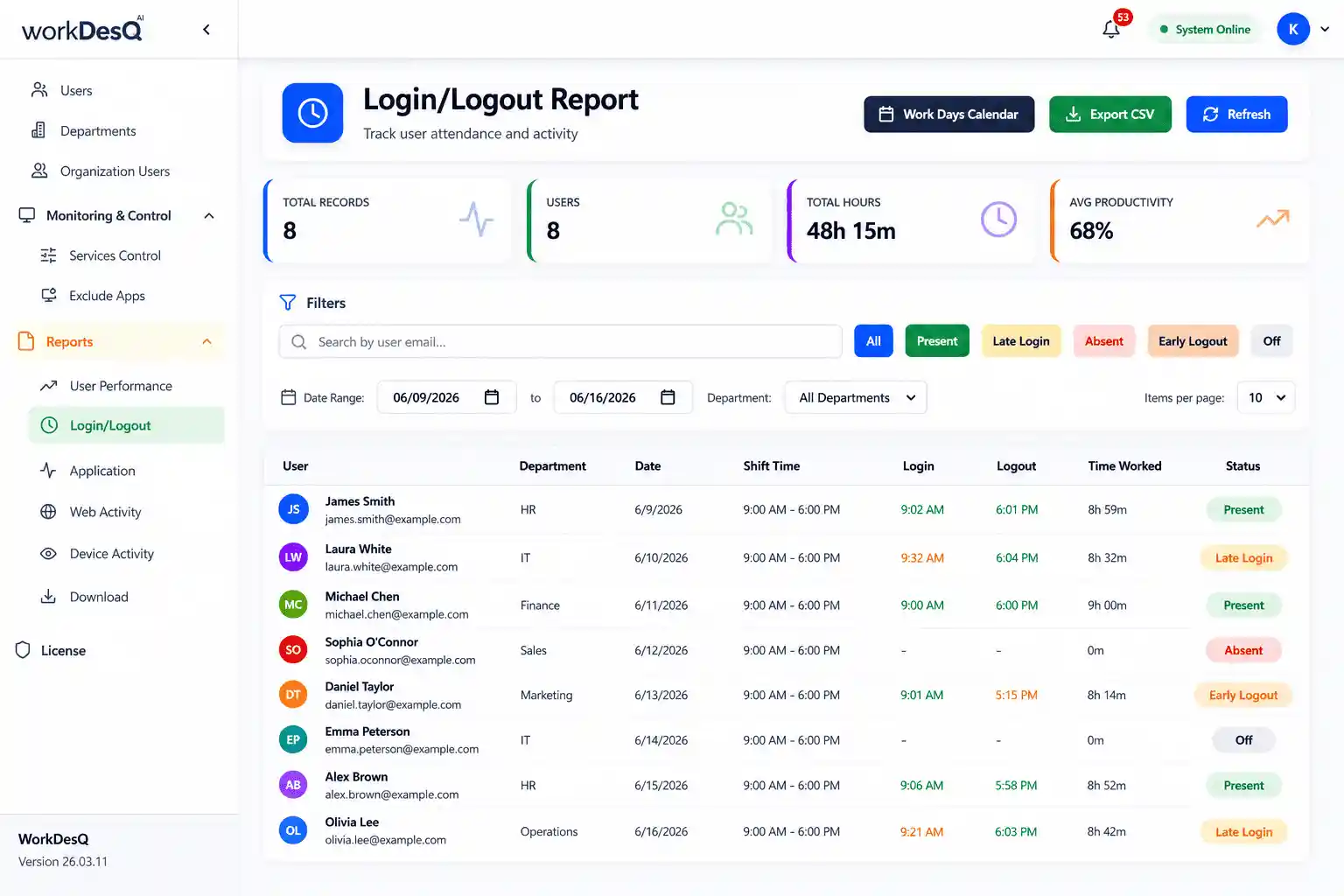
Show Real Performance Data Automatically
It automatically tracks how much work employees complete and supports fair ratings to give during performance appraisals
Tracks Productivity All Time
It shows employee productivity for the entire year and prevents managers from focusing only on recent work and mistakes.
Track Attendance
WorkDesQ automatically shows employee login, logout and attendance history. It helps managers check attendance data during performance appraisals.
Generate Performance Reports
Managers can create easy to read employee performance reports with one click. This helps make review meetings more transparent.
Store Employee Performance History
The software stores all employee performance history in one place and managers can check it anytime.
Need Help Reducing Bias in Performance Appraisals with WorkDesQ?
Conclusion
Identifying types of bias in performance appraisal is very important because unfair reviews demotivate employees, make them leave the company and create legal risks for the company.
If companies use fair methods like WorkDesQ data and make data-driven decisions then performance appraisals become fairer and more effective.
When employees trust their managers’ reviews they feel more confident and contribute more because they know their work is noticed by the manager.