Performance evaluation is a process in which HR professionals and managers measure an employee’s performance. By examining this data they provide guidance to the employee on areas that need improvement. This is not daily routine task for HR professionals, this is main task to improve overall company system
By using KPIs, behavioral insights and real-time feedback you can improve an employee’s work which helps company growth. Here you will learn
- What is performance evaluation?
- What is the real purpose of performance evaluation?
- What is the 5 layer Performance Evaluation System?
- What are the various performance evaluation methods?
- Types of performance evaluation metrics
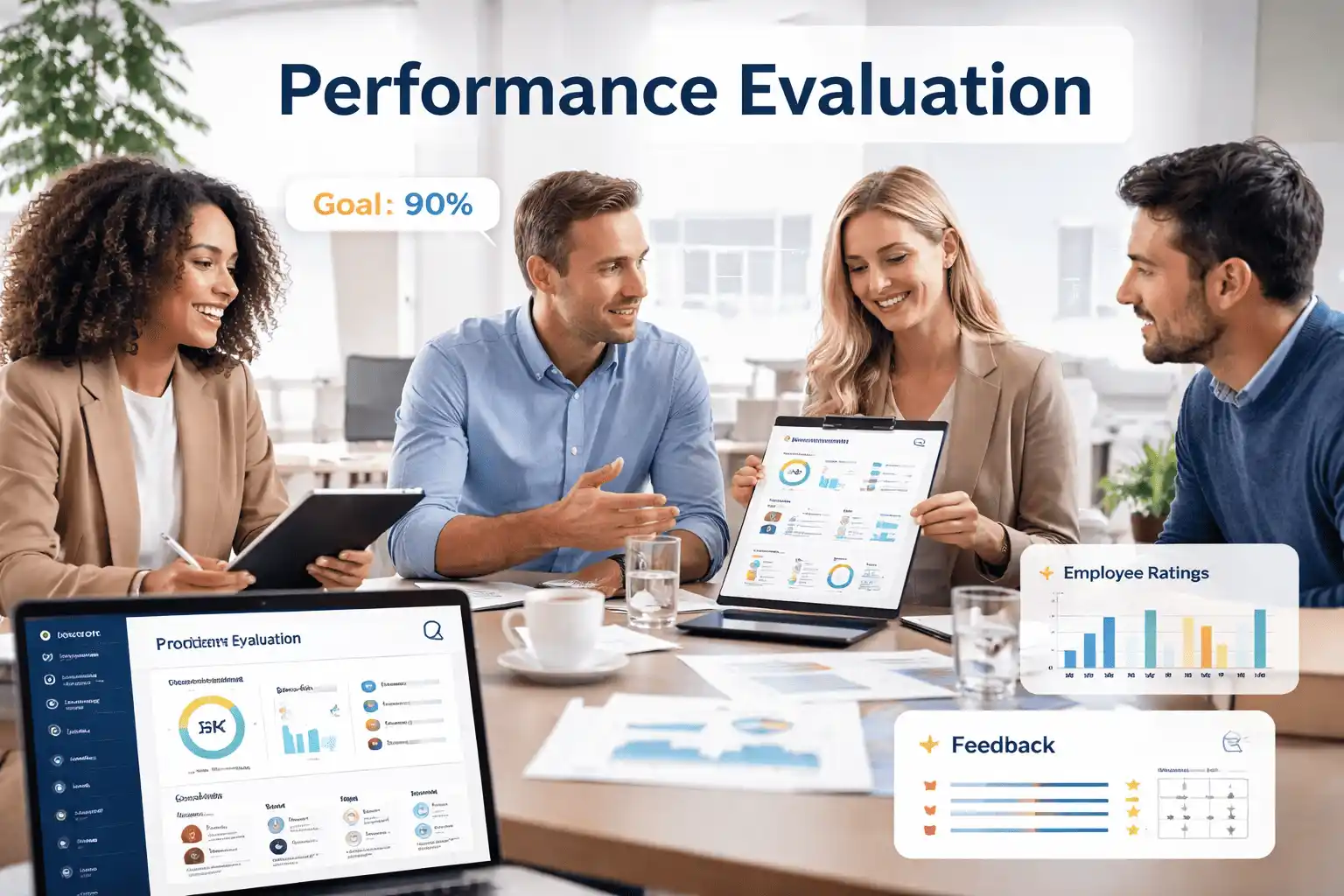
Performance Evaluation Advanced Meaning
Performance evaluation is not just reviewing employee performance it helps in multi-layered decision-making system that establishes a connection between:
Employee Activity → Output → Business Impact → Final Decisions
With this process HR professionals and managers can find answers to main questions like
- Which employees are generating high value?
- Which behaviors are yielding results?
- Where is an employee’s performance falling short?
- What steps should be taken next to facilitate improvement?
Once you understand these points you will truly understand what is performance evaluation.
Why Companies Fail at Performance Evaluation
Companies rarely fail at evaluation itself. They fail in the methods used to measure performance. HR professionals and managers likely take decision on base of guesswork and assumptions
- The employee works continuously and looks busy
- This employee has a good
- This employee is always punctual in attending the office.
- They remain active during official meetings.
- KPIs are unclear or misaligned.
- Feedback is reactive rather than continuous.
All of this happens without checking real data. So when decisions are made on guesswork companies fail in performance evaluation. The main problem is not performance evaluation itself but the system and this causes company failure.
Real Purpose of Performance Evaluation
Many people think performance evaluation happens only during salary or promotion time. This is not true. The reality is far away from this and includes things like
Driving business growth
Making data-driven decisions
Building high-performance teams
Identifying future leaders within the company
Companies that use performance evaluation grow faster.
5 Layer Performance Evaluation System
- Measurement Layer (What to Measure)
Define role-based KPIs
- Sales → Revenue, Conversion Rate
- Developers → Code Quality, Deployments
- Support → CSAT, Resolution Time
Mistake: Measuring activity instead of output
- Tracking Layer (How Data is Captured)
Utilize tools such as:
- Time Tracking
- Task/Project Tracking
- Productivity Analytics
Without tracking evaluation is just an opinion
- Feedback Layer (Human Insight)
Gather the following:
- Manager Feedback
- Peer Feedback
- Self-Assessment
Data reveals “what happened”
Feedback explains “why it happened”
- Analysis Layer (Data → Insight)
Make comparisons:
- Expected vs. Actual Performance
- Individual vs. Team
This is where real performance understanding is created
- Action Layer (The Most Important)
Make decisions regarding:
- Promotions
- Salary Adjustments
- Training
The Golden Rule:
If no action is taken → The evaluation holds no value
Performance Evaluation vs Appraisal vs Management
| Point | Performance Evaluation | Performance Appraisal | Performance Management |
|---|---|---|---|
| What it means | Checking how employee is working (using data) | Talking about employee performance | Managing & improving overall performance |
| Role | Measure performance | Discuss performance | Optimization |
| When it happens | Regularly (daily/weekly) | Once or twice a year | Ongoing process |
| Focus | Numbers & work data | Feedback & discussion | Growth & improvement |
| Result | Helps in taking decisions | Gives review summary | Improves performance |
What are Performance Evaluation Methods
| Method | Best For | When to Use |
|---|---|---|
| KPI-Based | Sales and operations roles | When work can be measured in numbers (like sales or tasks) |
| 360 Feedback | Managers and leaders | When behavior and teamwork matter |
| BARS | Customer-facing roles | When you want consistent behavior and service quality |
| MBO | Strategy and goal-based roles | When goals need to match company targets |
| Self-Assessment | All employees | When you want employees to review their own work |
What are Employee Performance Metrics
Companies cannot do performance evaluation until they understand employee performance metrics. Here are the key performance metrics
- Productivity Metrics
- Quality Metrics
- Efficiency Metrics
- Engagement Metrics
- Business Impact Metrics
It is based on these very metrics that HR professionals and managers conduct performance evaluations.
Advanced Use Cases of Performance Evaluation
Enterprise companies
- Big teams and many levels
- Need clear and standard systems
Startups
- Fast-moving work environment
- Focus on real-time tracking
Remote Teams
- Depend more on data
- Less direct visibility of work
Real Example of Performance Review in a Company
SaaS Company (50 Employees)
Problem:
- KPIs were not clear
- Only yearly reviews
- Low visibility of work
Solution:
- Started regular performance checks
- Used KPIs, tracking, and feedback
Results (in 3 months):
- 32% increase in productivity
- 18% drop in employees leaving
- Faster decisions
Key Learning
When you can see the work clearly → people take more responsibility → performance improves
Common Performance Evaluation Mistakes
When doing performance evaluation even good HR professionals and managers make common mistakes.
- Basing evaluations on an excessive number of KPIs
- Making decisions based on guesswork
- Ignoring an employee’s behavior
- Do not give feedback to employee
- Failing to use appropriate tools for the evaluation process
These mistakes happen because performance evaluation is treated like a routine task but it is very important for the company because it is the base for company and employee growth.
Steps To Implement Performance Evaluation
Once you have fully grasped what a performance evaluation entails, the next step is to determine how to implement it—specifically, which steps you should follow.
First week, define the employee’s KPIs.
Second week,, set up a tracking system for the employee.
Third week,, train someone other than yourself to assist with the process.
Fourth week,, begin conducting the performance evaluation; then, at the end of the month, make decisions regarding improvements based on the evaluation results.
How WorkDesQ Improves Performance Evaluation
Our employee monitoring software makes it easy to check and improve employee performance.
- Tracks work automatically
You can see what work is being done without asking again and again. - Shows real-time data
You don’t have to wait for monthly or yearly reviews. You can check performance anytime. - Clear performance reports
Simple reports help you understand who is doing well and who needs support. - Better feedback
Managers can give quick and clear feedback based on real work. - Less manual work
No need to track everything in sheets. The system does it for you.
When you can see the work clearly, you can make better decisions and improve employee performance faster.
Pro Tips on Performance Evaluation
We have seen performance evaluations in many companies and want to give some tips to help you understand what performance evaluation is and how it works.
- Without data an evaluation is just an opinion.
- Annual reviews have now become outdated.
- Leading companies that want to grow now do evaluations every month.
- The primary objective should always be improvement, not for measurement.
By following these tips your company will grow and you can solve problems early and employees will improve every month.
Final Words on Performance Evaluation
Performance evaluation is no longer optional, it has become a more important part for any organization like whether it is a startup, a mid-sized enterprise or a large corporation. It gives an advantage to companies that
- Use the right performance metrics;
- engage in continuous work tracking; and
- take swift action.
Such companies build strong teams and achieve rapid growth year by year. We hope you now understand what performance evaluation is, how it works and its real purpose.