See Productivity in Real Time.
Monitor employee activity, track work hours, and improve team efficiency with powerful insights.
When an employee refuses to do assigned work, it means an employee refuses to do work given by the manager as part of their job responsibilities. Sometimes an employee refuses directly. In some cases the employee delays the task, ignores the instructions, or avoids the task.
Refusing assigned work does not always mean the employee has a bad attitude or is creating problems. Sometimes there are real reasons
- Confusion about the task
- Lack of training
- Personal problems may happen
Before judging any employee, you need to understand the real problem and communicate with the employee calmly because professional conversations solve real issues and help avoid unnecessary conflicts.
Why an Employee Refuses to Do Assigned Work
- Unclear instruction
If employee do not understand clearly that what manager expect, so they might be facing some difficulties to complete the task
- Lack of training
Sometimes employee refuses to do assigned work because they do have right skills to complete the task and this situation happens generally when companies launch new product
- Heavy workload
Employees who already have a workload then employee may be refuse to do new work
- Personal challenges
Some employees refuse work because they face some family or personal problems like health issue and family emergencies
- Workplace conflicts
Conflict with coworkers or managers in this situation employees refuses to do work
Why Understanding the Reason Matters
- It helps to find out real reasons why employee refuses to do assigned work
- Manager can fair disciplinary action after understanding all situations
- Build trust between employees and managers
- It helps to reduce misunderstandings
- Make easier to find out right solution
- Help to avoid same do not happen in future
- Create positive and productive workplace
Steps for Managers to Handle Work Refusal
1- Stay calmly and speak with employees
2- Discuss the issue in private meetings
3- Ask employees why they refused to do work
4- Provide training session if employee needed
5- Review employees workload
6- Keep all things in written documented
7- Set clear deadlines and tell what you expect
8 -Take disciplinary action if same problem happened
Is Refusing Assigned Work Always Misconduct?
No, in some cases refusing assigned task completely reasonable when
- Task is completely unsafe
- The request is not ethical
- The requirement documents not available
- Work is not matching employee profile
- Employee suffering from medical problems
How Employee Monitoring Helps Identify Problems Early
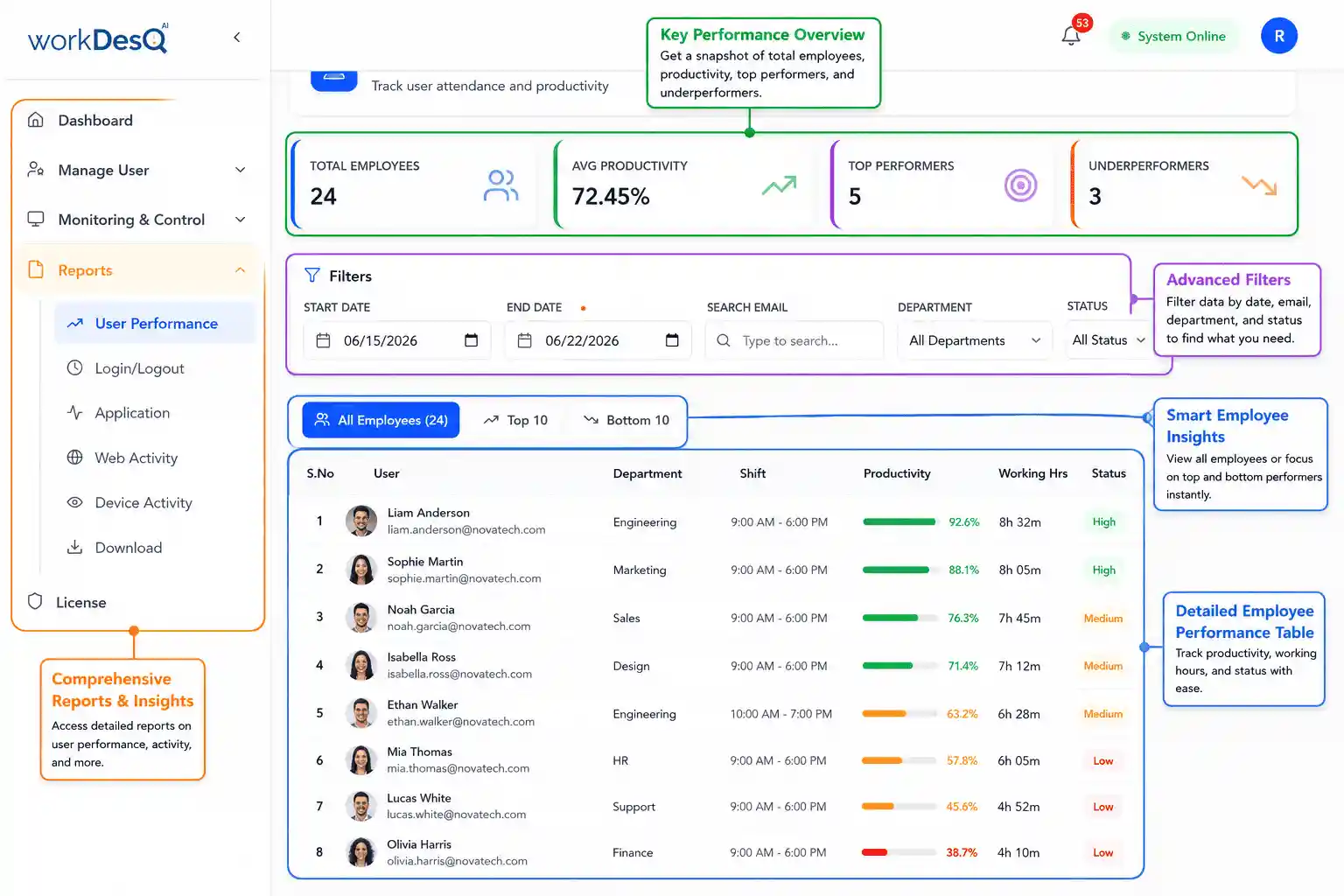
Most of the time where an employee refuses to do assigned work can be prevented by identifying problems early. Using employee monitoring tools or productivity trackers, managers understand employee work patterns like uneven workload, missed deadlines or productivity decline issues. Here are some features
- Task tracking
- Employee time tracking tools
- Attendance reports
- Productivity reports
- Application usage
WorkDesQ employee monitoring tool helps you to track employee productivity, track attendance and maintain fair performance management through accurate work data.
Best Practices to Prevent Employees from Refusing Assigned Work
It is always easy to prevent problems instead of solving problems. Those managers who communicate well with their employees usually refuse cases they find low as compared to others. Here are some best practices you should follow
- Define job responsibilities clearly
- Set achievable deadline and goals
- Provide regular training and feedback
- Encourage open communication
- Balance workload fairly
- Document important performance discussions
- Use productivity tools
Final Thoughts
Before taking any action on when an employee refuses to do assigned work you should find real reasons why they deny. Those managers who listen to employees, set clear expectations, provide right support or follow company’s rules can handle all situations professionally and fairly.
Using reliable productivity tools with strong leadership helps to find out problems early because it improves employee accountability and makes a good workplace where every employee understands their responsibilities.