See Productivity in Real Time.
Monitor employee activity, track work hours, and improve team efficiency with powerful insights.
Every business owner wants to grow their business and needs the right employees. If a company hires people without workforce planning, then staff become short and hiring costs increase. When staff are short then pressure automatically increases on current employees. A workforce planning strategy example helps you understand how to hire the right employee at the right time without increasing hiring costs too much.
Using a workforce planning strategy makes business growth easier for you. In this guide you will understand
- what is workforce planning strategy
- list of workforce planning strategy examples
You can use workforce planning examples step by step and it makes sure the right employee is available at the right time.
The Purpose of Workforce Planning Strategy
| Workforce Planning Step | Purpose |
|---|---|
| Define Business Goals | To understand future business direction |
| Review Current Workforce | Analyze current employee skills and count |
| Forecast Future Needs | Future hiring requirements |
| Find Workforce Gaps | Compare current workforce vs future needs |
| Create an Action Plan | Plan hiring, training and promotions |
| Review Progress | Update the plan according to business changes |
Why Workforce Planning Is Important
Business requirements keep changing because companies launch new products, open new offices in different locations and enter new markets. If the workforce is not ready then the business grows slowly. Here are some common reasons why workforce planning is so important.
- Better hiring decisions
- Low hiring cost
- Improved employee productivity
- Reduce skill gaps
- Better employee development
- Support for business growth
Signs Your Business Needs a Workforce Planning Strategy
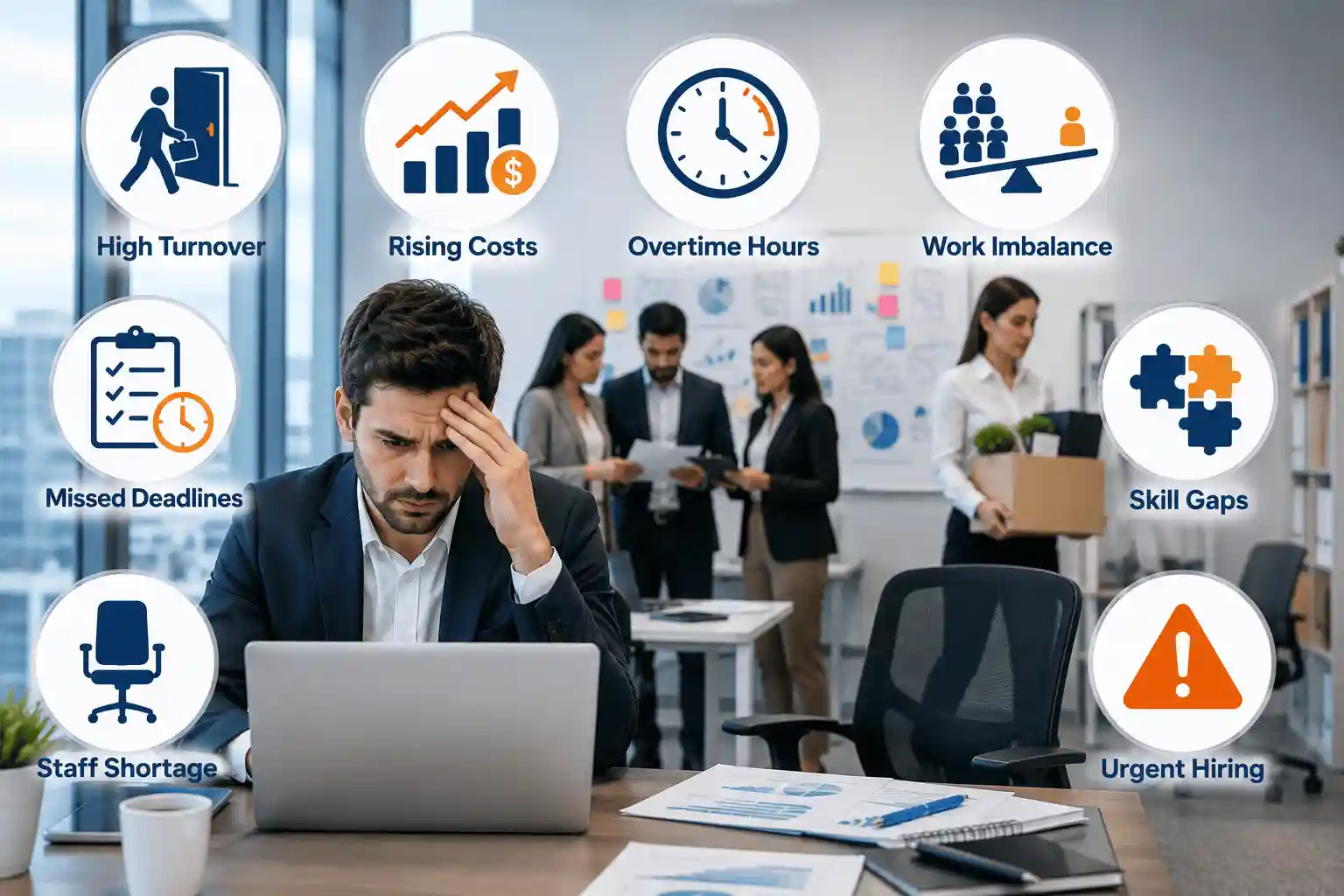
If you are facing these problems in your company then you need a workforce planning strategy.
- Hiring always feels urgent.
- Employee work overtime on regular basis
- The team struggles to meet deadlines.
- Employee turnover increases
- Employees do not have enough skills.
- Hiring costs are increasing.
- Managers cannot distribute work equally.
- The business grows slowly because of a staff shortage.
4 Workforce Planning Strategy Example
1- Siemens: Preparing Employees for Future Skills
When technology changed Siemens knew that some employees would need new skills. They did not hire new employees. They upgraded the skills of current employees through training.
Outcome – This training helped Siemens fill many positions with existing employees and reduced hiring costs
What we learn – Review your current employees early and train them before skill gaps become a big problem.
Read full story – Strategic Workforce Management
2- Merck KGaA: Planning for Future Talent
Merck KGaA wanted business growth in different countries and created a common skill framework and understand what skills employees already had and what skills they have to learn in future.
Outcome – With the help skills framework HR teams make better hiring and training decisions
What we learn – Always keep a record of employee skills so you know when to hire new employees and when to train existing staff.
Read full story – Merck KGaA Germany’s Best Practices for Successful Workforce Planning and Skills Management
3- Deere & Company: Building Future Leaders
Deere & Company started identifying future managers from existing employees instead of waiting for managers to retire.
Outcome – The company already had future managers ready.
What we learn – Prepare future leaders before positions become vacant.
Read full story – APQC – Work Force Planning: 4 Ways
4- Qantas: Matching Workforce Plans with Business Goal
Qantas made workforce planning part of its overall business planning process. Before launching a new product the company reviewed staffing needs, customer demands and existing employee skills.
Outcome – The company hired new employees according to its needs and goals and removed extra hiring costs.
What we learn – Make a hiring plan according to business goals and future growth.
Read the full story – Qantas Case Study.
How to Make Workforce Planning Strategy in Your Company
You do not need a large HR team to make a workforce planning strategy. Even a small team can make a good strategy by following simple steps.
Step 1: Define Your Business Goals
Identify what your business needs to achieve in the next 6 to 24 months.
Let us understand with example
- I want to increase sales by 30 percent.
- Open new office at another location
- I want to launch 2 new products.
- Expand into new markets
Step 2: Review Your Current Workforce
You have to make a list of employees that you want to review.
- Number of employees in each department
- Employee skills and experience.
- Empty positions
- Employees who may retire or leave soon.
Step 3: Forecast Future Workforce Needs
Estimate how many employees your business will need in the future.
Step 4: Identify Workforce Gaps
Compare your workforce with future needs
Step 5: Create an Action Plan
Create an action plan that may include hiring new employees, training existing staff and promoting high-performing employees.
Step 6: Track Progress Regularly
Review your workforce every 3 to 6 months and track.
- Hiring process
- Employee turnover
- Training completion
- Skills improvements
- Business growth
How WorkDesQ Helps in Workforce Planning
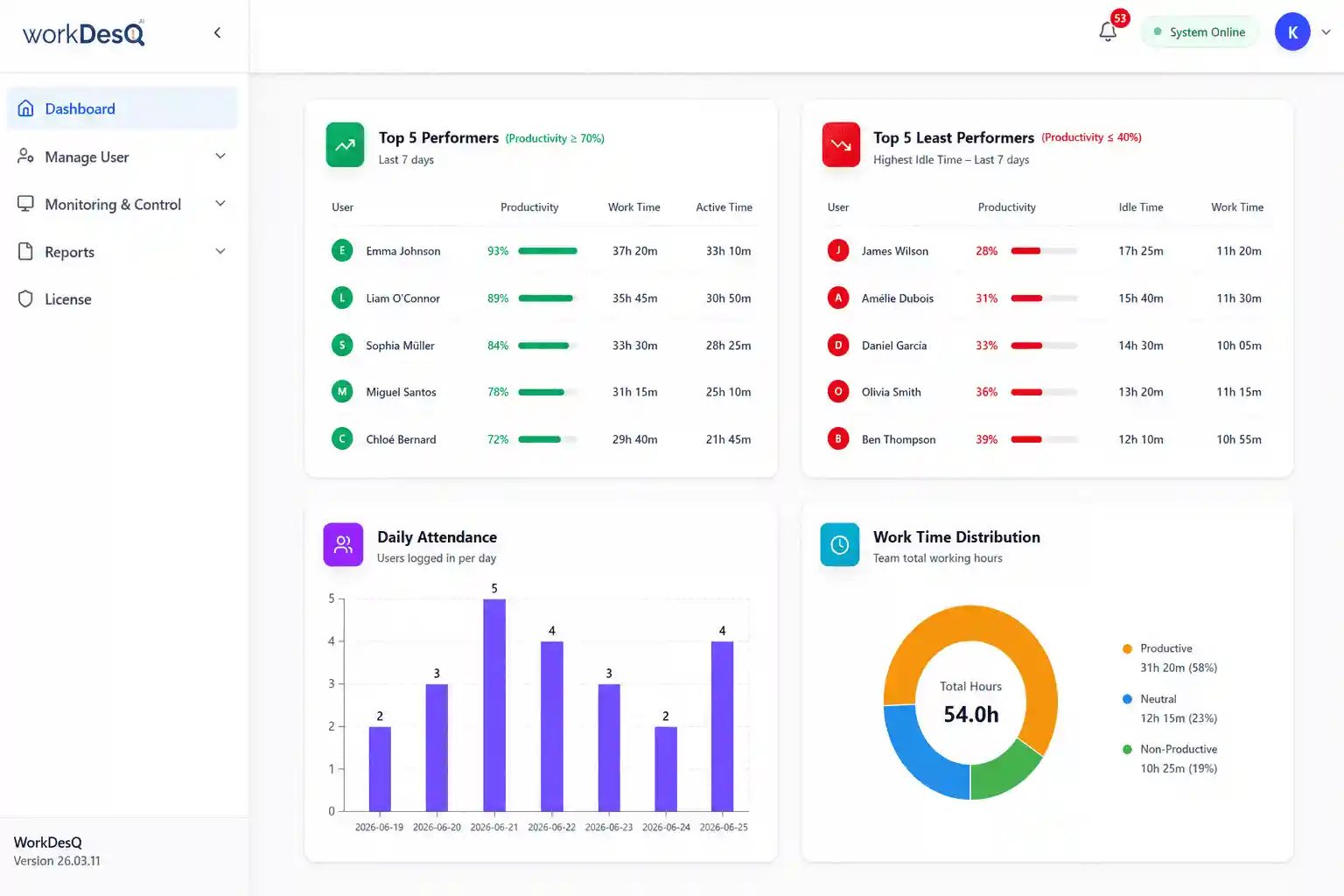
By tracking workforce productivity
WorkDesQ shows how employees spend their work hours and shows who is performing well and who needs improvement.
Monitor attendance and work hours
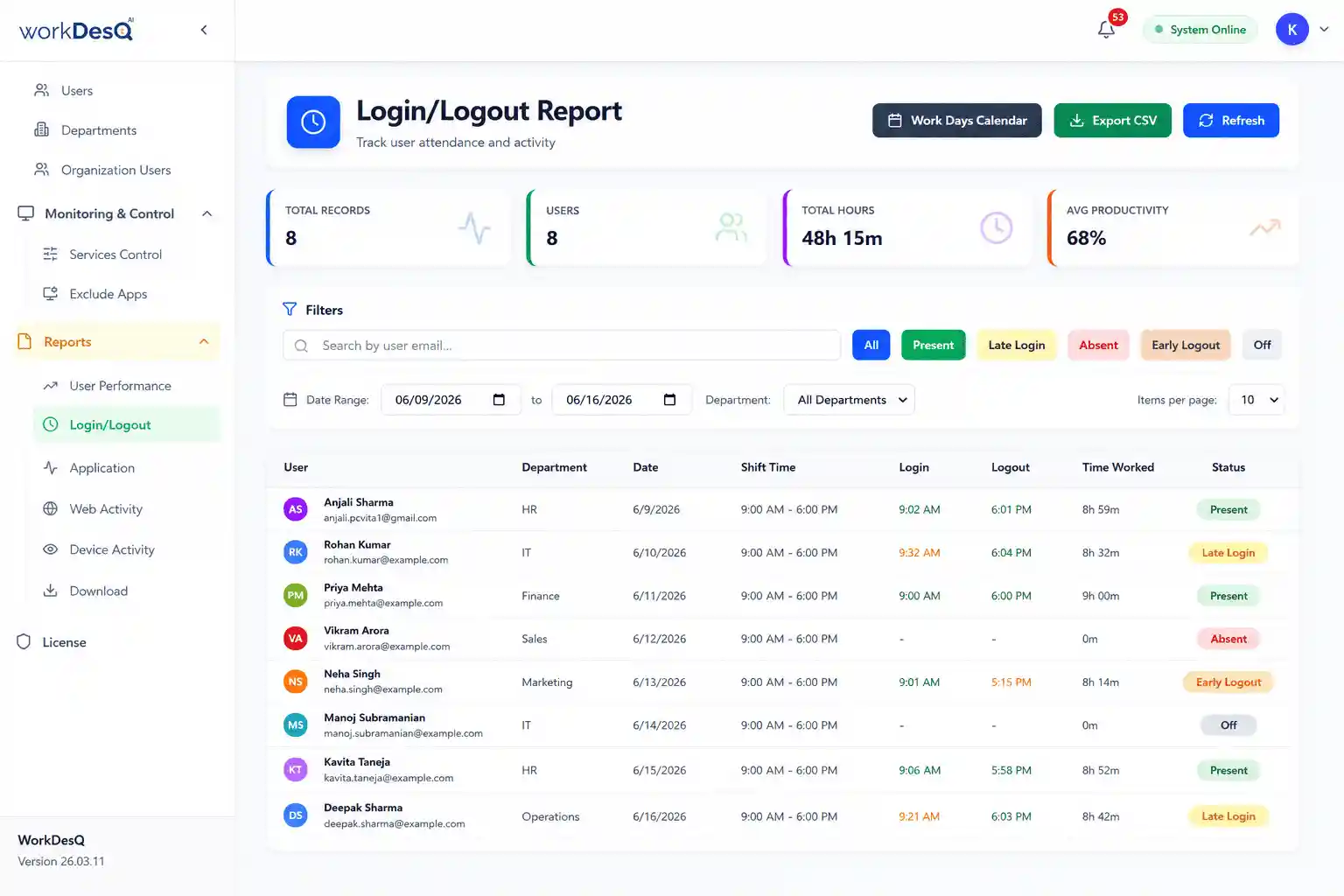
Track employee attendance and work hours and show the total working hours in a day.
Identify Workload Gaps
See which teams are overloaded and which teams are not.
Support Better Hiring Decisions
Use WorkDesQ reports to find which departments is low performing needs training to improve productivity
Employee Work Monitoring Software
Start your free demo today and see how WorkDesQ simplifies workforce planning.
Conclusion
A successful workforce planning strategy example is not only about hiring. It also helps prepare your business for growth. Reviewing your current workforce helps you find out
- How many employees are needed in future
- Identifying skill gaps in employees
- Reducing cost of training and hiring
- Improve employee productivity because when employees skills upgraded then productivity automatically improves
- Build stronger workplace