See Productivity in Real Time.
Monitor employee activity, track work hours, and improve team efficiency with powerful insights.
Workplace culture is the main reason for an employee’s career because a healthy work environment improves productivity and trust. Disrespectful behavior lowers morale, slowly breaks trust and employees become burned out.
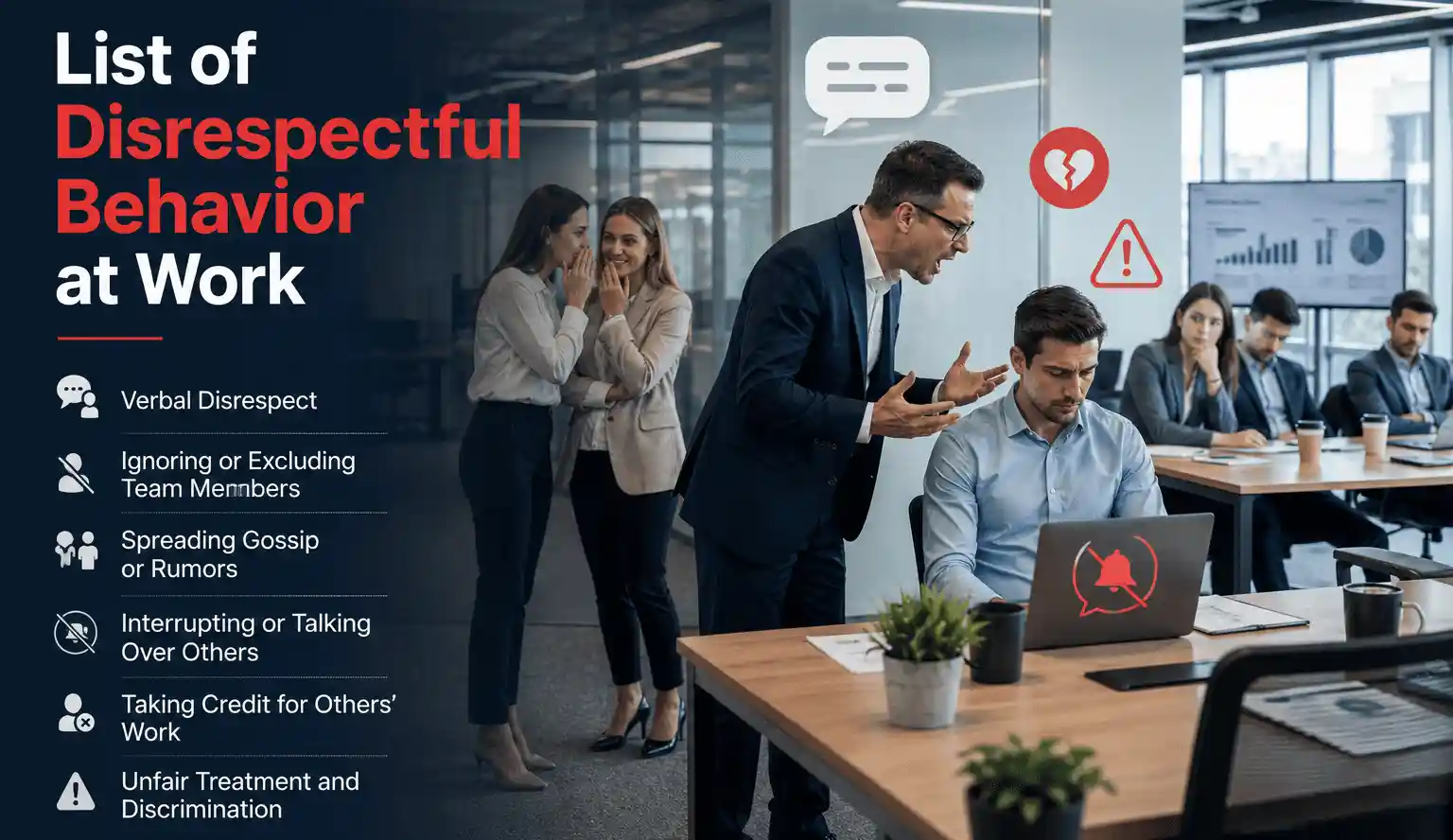
If you understand the list of disrespectful behavior at work you can identify this kind of behavior early because it is the first step to make the workplace safe.
Examples of Verbal Disrespect at Work
Words have a strong impact at work and verbal abuse is one of the most common reasons for disrespect.
1.Shouting or Yelling – Shouting at coworkers during discussions or disagreements.
2.Insulting Language– Using abusive words for team members like name-calling or insulting remarks.
3.Public Humiliation – Criticizing an employee in front of others instead of giving feedback privately.
4.Sarcasm and mocking Using sarcastic comments to make fun of an employee’s ideas.
5.Backstabbing and Gossip – Spreading negative things about colleagues
6.Inappropriate Jokes – Telling offensive discriminatory and vulgar jokes that make people feel uncomfortable.
7.Swearing and cursing– Using abusive or offensive language in front of coworkers.
8.Making personal remarks– Making negative comments about someone appearances, clothing, background and personal life
Examples of Communication Issues at Work
Sometimes employees intentionally use poor communication to disrespect others.
9.Constant interruptions– Interrupting someone when they are speaking or giving a presentation.
10.The Silent Treatment – Ignoring colleagues intentionally and avoiding talking to them.
11.Dismissive body language – Rolling eyes and folding arms to show someone disrespect while someone is speaking.
12.Ignoring email and messages – Not replying to professional emails and messages causing delays in work.
13.Talk to others– Speaking to coworkers with a rude attitude because they know less than you.
14.Talking over people – Not giving anyone a chance to speak in a group discussion.
15.Aggressive message– Sending aggressive messages instead of professional messages.
16.Withholding information– Not sharing important documents and updates intentionally.
Examples of Teamwork Problems at Work
When employees show toxic behavior the team quickly breaks down.
17.Take credit for other work – Take credit for someone ideas, projects and success
18.Passing the blame – Blaming others for your own mistakes.
19.Refusing to help– When a coworker needs help but you do not support them and say this work is not mine.
20.Excluding team members– Some employees intentionally leave others out of meetings, lunches or group chats
21.Chronically missing deadlines– Intentionally missing deadlines so that other employee overloaded with work
22.Undermining peer authority– Trying to control coworkers’ work who have same role or level as you
23.Gossiping about project failures – Making fun of other employees’ mistakes or failures.
24.Ignoring group decisions– Continuing to work your own way after the final decision from management.
Examples of Manager-to-Employee Disrespect
When managers misuse their power the workplace becomes stressful.
25.Micromanagement – Monitoring employee every small thing and do not trust on their skills
26.Favoritism– Managers give special treatment to some employees and ignoring other employee hard work
27.Dismissing work-life balance– Expecting late night replies from employees
28.Stealing promotion opportunities- Stopping promotions for hardworking employees
29.Threatening job security– Give statement like “You will be fired at any time without any reason”
30.Giving only negative feedback– Ignoring employee achievements, only focus on mistakes and highlight them
31.Canceling 1 on 1 meetings – Canceling regular meetings or postponing them again and again, employee feels undervalued
32.Setting unreal workloads– Giving employees heavy workloads that are impossible to finish to meet deadlines and that can lead to burnout
Examples of Employee-to-Manager Disrespect at Workplace
When employees ignore leadership, then it affects discipline and workflow both
33.Open insubordination– Employees denying company policy and leadership instruction
34.Talking behind a manager’s back– Spreading negative things in the absence of manager
35.Bypassing management– Talking major issues to senior management instead of talking with their manager
36.Challenging authority publicly– Instead of private discussion, arguing with the manager in front of others
37.Rolling eyes in meetings– While the manager is giving instructions, employee show sarcastic facial expression
38.Ignoring deadlines on purpose – Employee delay deadlines intentionally because of some unprofessional reasons
39.Falsifying work reports– Updating wrong information about project information
40.Refusing feedback– Becoming angry when receiving constructive feedback
Examples of Customer-Related Disrespect at Work
41.Using rude language with clients– Behaving rudely or unprofessionally with clients
42.Ignoring customer complaints – Not taking genuine customer complaints seriously or not taking action to solve complaints
43.Putting customer on hold for too long– Putting customers on hold for a long time because of laziness
44.Arguing with customers – Turning small disagreements into big arguments
45.Mocking customers privately– Making fun of customer questions or customer personality
46.Breaking promises– Not keeping promises made to clients
Examples of Remote Work Disrespect at Work
Remote work behavior is as important as onsite behavior
47.Keeping cameras off intentionally – Camera off without valid reason during mandatory meetings
48.Multitasking during video calls– Using social media or phones during meetings or replying to personal messages
49.Muting or dropping people from calls – Removing or muting coworkers by misusing host controls
50.Inappropriate chat messages– Sending offensive messages through Slack and Microsoft Teams
51.Looming or micromanagement digitally – Constantly asking for software tracking or active status updates every minute
Conclusion
Making a respectful workplace is not only the responsibility of HR and managers, employee needs to contribute equally. If you fully understand the list of disrespectful behavior at work, then identify unprofessional actions early and stop them from increasing.
Small disrespectful habits like constantly interrupting, use rude language, ignoring emails, gossiping and taking full credit for someone else’s hard work, it damages trust and affects team productivity. When companies promote healthy workplace, open communication and mutual respect then employees stay more engaged, motivated and productive